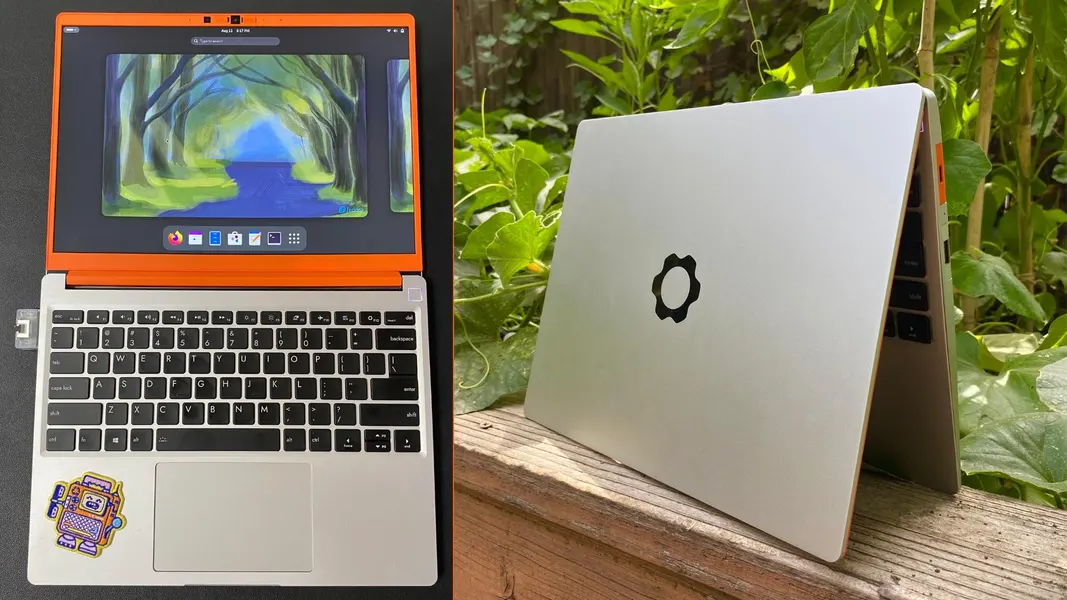
The Framework Laptop 13 stands out in today’s laptop market for one reason: modularity. Unlike most ultrabooks, which force you to replace the entire machine to upgrade or repair, Framework’s 13-inch model lets you swap out key components like RAM, ports, the mainboard, and even the display. This makes it unusually sustainable — a rare trait in modern laptop design.

Design & Build: Modular by Design
One of the most defining features of the Framework Laptop 13 is its repairable and upgradable architecture. According to The Guardian, users can easily replace components like RAM, SSDs, batteries, and ports. The Guardian
The 13.5″ display has a matte finish to reduce glare. The Guardian
The hinge opens a full 180°, making it handy for different use cases. The Guardian
Port system: modular expansion cards that let you swap in the ports you need (USB‑C, HDMI, etc.). RTINGS.com+1
Repairability is top-tier: The battery, memory, SSD, screen — even the logic board — can all be replaced or upgraded. thedailymagazines.com+1
Performance
CPU Options & Power
The 2025 model offers AMD Ryzen AI 300-series chips (up to Ryzen 9 HX 370). Tom’s Hardware
According to Ars Technica, this is the fastest Framework 13 yet, but the trade-off is lower battery life for some configurations. Ars Technica
In Tom’s Hardware tests, the Ryzen AI 9 HX 370 performed very well: multi-core scores were strong, and tasks like file transfer and video transcoding were handled smoothly. Tom’s Hardware
Thermals & Noise
As per Expert Reviews, the fans ramp up under load, and the CPU can briefly draw up to 35W, but it then throttles to around 30W to manage heat. Expert Reviews
Keyboard temperatures can rise under load. RTINGS.com
Graphics
Integrated graphics are decent for daily productivity and light workloads, but not ideal for demanding gaming or intensive GPU tasks. RTINGS.com+1
Display & Keyboard
Two screen options:
13.5″, 2256×1504, 60 Hz RTINGS.com
13.5″, 2880×1920, 120 Hz (available in the DIY edition) Tom’s Hardware
The 3:2 aspect ratio offers more vertical space — great for productivity, reading, or working with documents. RTINGS.com
Tom’s Guide measured the screen’s color accuracy: about 102% of sRGB, making it good for creative work not requiring ultra-wide color gamuts. Tom’s Guide
The keyboard provides good travel; the glass trackpad feels precise. The Guardian
Webcam: 1080p with a physical privacy switch. The Guardian
Battery Life
Battery life varies significantly depending on the configuration:
According to PCWorld, the 62.3 Wh battery gave just 11+ hours in video playback tests — not bad, but not best-in-class. PCWorld
With the newer AMD Ryzen AI 300 model, Ars Technica reports about 8.5 hours in a typical work‑day test. Ars Technica
According to The Guardian, lighter productivity tasks (browser + email) lasted around 8–9 hours. The Guardian
Audio & Connectivity
Stereo speakers are louder than before, but not particularly rich or bass-heavy. The Guardian
Excellent flexibility in ports thanks to modular expansion cards: you can swap USB‑C, HDMI, SD card, and more. Tom’s Hardware+1
There’s also a 3.5 mm headphone jack, which many modern laptops omit. The Guardian
Longevity & Upgradeability
This is where the Framework 13 truly shines:
Easy to replace or upgrade nearly every part: SSD, RAM, battery, mainboard, keyboard top, display, and even expansion cards. thedailymagazines.com
The 2025 version supports drop-in upgrades: if you own a previous-gen Framework 13, you can replace the mainboard with the newer AMD-based one without buying a whole new laptop. thedailymagazines.com
iFixit and other teardown experts praise its repairability, giving it high marks. The Guardian+1
Real User Feedback
Some users love the modular design and easy repairability:
“Very lightweight … feels great. I installed my own SSD & RAM (super easy, honestly feels like assembling Lego).”
Others note trade-offs:
“Energy efficiency is just … terrible for battery life … I travel with a power bank in my bag.”
There are also reports that performance in some Ryzen models could be limited by power profiles:
“Performance discrepancy between Framework 13 HX370 … explained the difference.”
Pros & Cons
Pros:
Extremely modular – replace or upgrade almost every component.
Repairability is one of the best in any laptop.
Good build quality + sturdy chassis.
Expandable port system.
Option to use high‑performance AMD Ryzen AI‑series chips.
3:2 display option is very productivity-friendly.
Cons:
Battery life lags behind some ultrabooks. Expert Reviews+1
Integrated graphics aren’t for high-end gaming. RTINGS.com
Keyboard and thermal profile: gets warm and fans ramp under load. Expert Reviews
Webcam quality is only average compared to modern premium laptops. Expert Reviews
Who Is This Laptop For?
Tech enthusiasts & tinkerers: If you love to customize, upgrade, or repair your own machine, this laptop is ideal.
Sustainability-conscious users: Modular design means less electronic waste; parts can be replaced instead of discarding.
Power users on a budget over the long term: Buying the DIY or modular version may save money as you upgrade only what you need.
Professionals or students: Especially those who value portability, repairability, and performance for productivity tasks.
It’s less ideal for gamers or creatives who need discrete GPU power or ultra-long battery life.
Verdict
The Framework Laptop 13 is a bold statement in the laptop world — built for longevity, repairability, and future upgrades. Its modular design is unmatched, and performance (especially in the 2025 Ryzen AI version) is very strong. However, those gains come with trade-offs like modest battery life and compromise on graphics.
If you’re someone who plans to keep your laptop for years, upgrade components over time, or just hates buying disposable electronics, the Framework 13 is worth serious consideration.