Running a website takes time, effort, and money. You need to research topics, write useful articles, maintain your hosting, renew your domain, and keep your site working properly. If you manage a blog or niche website, you may eventually ask an important question: how can you turn some of that traffic into income?
One platform in this category is NG Adverts, an advertising network that connects advertisers with publishers. Its website describes a system in which advertisers create campaigns while publishers display advertising codes on approved websites. The platform states that publishers earn from valid clicks on their ads, subject to its rules and account arrangements.
In this guide, I will explain what NG Adverts is, how its publisher system works, how to get started, what to consider before placing ads on your website, and how to decide whether it deserves a place in your monetization strategy.
If you want to explore the platform, you can use my referral link here: Sign up or explore NG Adverts. Read the details in this article first so you understand what to check before committing your website to another advertising service.
What Is NG Adverts?
NG Adverts is an online advertising platform designed to connect advertisers who want to promote products or services with publishers who have advertising space on their websites. The company describes its service as a marketplace where advertisers submit campaigns and publishers generate advertising codes for their sites.
This arrangement serves two different groups. An advertiser wants to reach potential customers, while a publisher wants to monetize an existing audience. The platform provides the infrastructure through which ads can be displayed and campaign activity can be measured.
For example, imagine you run a Nigerian technology blog that publishes smartphone reviews, laptop buying guides, and internet tutorials. Your articles attract visitors through Google Search, social media, direct visits, or links from other websites. Instead of relying entirely on product sales or sponsored articles, you might explore displaying advertising units within suitable areas of your content.
NG Adverts provides publisher ad codes for this purpose. After completing the account and website approval steps, publishers can generate advertising units and add the supplied code to the appropriate pages on their websites.
The platform also offers services for advertisers. According to its official information, advertisers can create text or banner campaigns and configure targeting options. That means NG Adverts is not simply a blog monetization tool; it also serves businesses seeking online visibility.
You can read the company’s description of its service on the official NG Adverts About Us page.
How Does NG Adverts Work for Publishers?
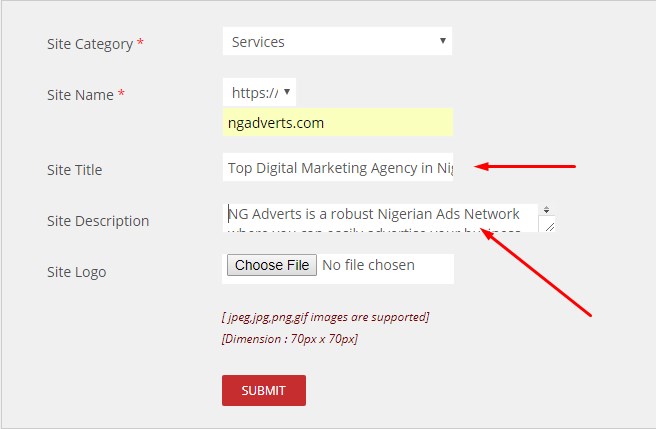
The basic publisher model is straightforward. You register, submit your website for review, create an ad unit after approval, and place the generated code on your website. When the ad system records qualifying activity, your account may receive earnings according to the platform’s rules.
However, there is an important distinction between displaying an ad and earning money from it. An ad impression means that an ad has been displayed. A click means a visitor has interacted with it. Under the publisher model described by NG Adverts, valid clicks are important to earnings. You should therefore avoid assuming that every page view will generate income.
1. Create a publisher account
Your first step is to visit NG Adverts and register for an account. Make sure you select the publisher option if your primary goal is to display ads on your own website. Advertisers and publishers have different responsibilities, so choosing the appropriate account type matters.
You can start from this NG Adverts referral link. Review the registration form and the platform’s current terms before submitting your information.
2. Verify your account and submit your website
Registration alone may not be enough to begin displaying ads. NG Adverts’ publisher instructions explain that publishers should verify their accounts, sign in, and submit their websites through the site-management area for approval.
Before submitting your site, make sure it loads correctly on desktop and mobile devices. Check that your navigation works, your important pages are accessible, and your content offers real value to visitors. A site with useful original articles and a clear purpose is easier to maintain than a site filled with thin pages or broken links.
If you manage a WordPress website, review your categories, menus, contact page, privacy policy, and mobile layout. You should also confirm that your site does not contain unwanted redirects or advertising scripts that interfere with visitors’ browsing experience.
For more help with your website setup, see Infolandia’s guide on creating your own website in 2026.
3. Generate an advertising code
Once your website has been approved, the next step is to create an ad unit. NG Adverts’ published instructions direct publishers to the ad-code creation area, where they can choose an advertising format and generate the code for their site.
The available formats and options may change, so check the choices shown in your account rather than relying on an old screenshot or someone else’s settings.
Pay attention to the dimensions of the unit you select. A wide banner may fit a desktop header or an article area, while a smaller rectangular unit may work better in a sidebar. The correct size depends on your theme, the available space, and the devices your visitors use.
4. Add the code to your website
After generating the code, place it where you want the ad to appear. WordPress users may be able to use a suitable HTML block, an approved ad-management plugin, a theme widget, or a designated advertising area. The safest option depends on the website’s theme and how the ad code works.
Do not paste unfamiliar scripts into every template just because a tutorial recommends it. Start with one appropriate placement, test it, and expand only when you know it works correctly.
On WordPress, test the placement on both desktop and mobile devices. An ad that looks fine on a large screen may create horizontal scrolling, overlap article text, or leave a large empty space on a phone. If you use a caching plugin or content delivery network, you may also need to clear the cache before checking your changes.
5. Monitor your results
Once the ads are running, review the reporting tools available in your account. Look for the metrics the platform provides, such as clicks, impressions, and earnings. Check whether the activity matches your site’s traffic patterns.
Do not judge a network from one afternoon of data. Traffic fluctuates, and a small website may not generate enough activity to draw meaningful conclusions immediately. Instead, observe performance over a reasonable period while keeping records of your placements and any changes you make.
For a clearer view of your audience, use website analytics. Infolandia also has a practical guide on using Google Analytics to grow an online business.
What Types of Websites Should Consider NG Adverts?
NG Adverts may be worth investigating if you operate a content website with an established purpose and visitors who regularly read your pages. However, a network’s availability does not automatically mean every website will be approved or perform well.
Technology and gadget blogs
Technology websites publish content about smartphones, laptops, apps, internet access, software, and digital tools. These topics can attract readers who are actively researching products or trying to solve specific problems.
For instance, a guide comparing budget smartphones can attract visitors who are considering a purchase. A tutorial explaining how to secure a laptop can attract people looking for practical advice. Depending on the audience and advertising demand, these pages may offer opportunities for relevant advertising.
If technology is your niche, you can strengthen your content strategy with Infolandia’s guides to smartphones to buy in Nigeria and laptops to buy in Nigeria.
Educational and tutorial websites
Websites that publish educational resources, software tutorials, career advice, or practical digital-skills lessons may also explore advertising. Their main priority should be helping readers understand a topic, not filling every available space with ads.
For example, a tutorial about learning data analysis should explain the learning path, tools, practice exercises, and common mistakes. Advertising can support that content, but it should not make the lesson difficult to follow.
Publishers in this category should also check whether the content and audience comply with the advertising network’s requirements. Websites aimed at students or younger audiences need particular care when selecting content, products, and advertising placements.
Business and lifestyle websites
Business blogs, local information websites, and lifestyle publications may also investigate display advertising. Their suitability will depend on the platform’s approval criteria, audience quality, content, and available advertising demand.
A publisher should never assume that a particular niche guarantees approval or high earnings. Build the site around a clear audience and useful information first, then evaluate monetization options that fit.
How Much Can You Earn With NG Adverts?
This is one of the most important questions to ask before joining an advertising network. Unfortunately, there is no responsible way to promise a fixed amount without reliable, current information about your traffic, the platform’s rates, the quality of visitor activity, and the applicable payment terms.
NG Adverts describes its publisher model in terms of valid clicks. The value of a click may depend on factors such as the campaign, advertiser demand, location, and other platform-specific rules. You should check your account’s reporting and current documentation for the details that apply to you.
Consider a simple example. Two websites may each receive 10,000 page views in a month, but their earnings can differ substantially. One site may have fewer eligible ad impressions or clicks. Another may have different traffic sources, different ad placements, or a different audience. Their results can therefore vary even when their total page views look similar.
This is why you should be cautious when someone claims that every publisher can earn a specific amount per day or month. Unless the figure comes with reliable evidence and clear conditions, it should not be treated as a realistic forecast for your website.
Factors that may affect publisher earnings
- Traffic volume: More relevant visitors can create more opportunities for ads to be seen, although traffic alone does not guarantee revenue.
- Visitor location: Advertisers may value audiences differently depending on their campaigns and target markets.
- Content topic: Demand for ads varies between niches and individual campaigns.
- Ad placement: An ad that loads properly and fits naturally into a page may be more useful than one hidden in an awkward location.
- Device experience: Visitors should be able to read and navigate your website comfortably on phones, tablets, and computers.
- Valid activity: Networks may filter invalid clicks or other activity that violates their rules.
- Payment conditions: Minimum payout requirements, account verification, and payment processing terms can affect when you receive money.
For a new blogger, the most useful goal is not to chase a specific income figure. Focus on publishing helpful content, attracting relevant visitors, keeping your website technically sound, and measuring the results of each monetization option.
NG Adverts vs Google AdSense: What Should You Know?
Many website owners compare NG Adverts with Google AdSense because both are associated with website advertising. However, they should not be treated as identical services.
NG Adverts presents itself as an advertising marketplace connecting advertisers with publishers and describes publisher earnings based on valid clicks. Google AdSense has its own eligibility requirements, policies, reporting tools, ad-serving systems, and payment arrangements.
Here is a practical comparison of the main points to investigate before making a decision.
| Factor | NG Adverts | Google AdSense |
|---|---|---|
| Primary purpose | Connects advertisers and publishers through its advertising marketplace. | Helps eligible publishers monetize content with Google-served ads. |
| Publisher setup | Register, verify your account, submit your website, and follow the platform’s approval process. | Apply, connect your site, and meet Google’s eligibility and policy requirements. |
| Ad implementation | Generate the ad code available in your approved publisher account. | Use the supported ad code and settings provided by AdSense. |
| Earnings | Follow the network’s valid-click rules and the reporting shown in your account. | Earnings depend on ad formats, eligible activity, advertiser demand, and Google’s applicable terms. |
| Policies | Read NG Adverts’ program guidelines and campaign requirements. | Follow Google’s publisher policies and ad implementation requirements. |
| Best next step | Confirm approval criteria, available formats, payment conditions, and current support information. | Review the official eligibility requirements and policies before applying. |
For Google’s requirements, consult the official AdSense eligibility guidance and its programme policies.
There is no universal winner for every publisher. Your choice should depend on your website, the networks available to you, their policies, their reporting, their payment arrangements, and your actual results.
Can You Use NG Adverts Alongside Other Ad Networks?
Some publishers use more than one advertising provider to diversify their revenue. However, you should not assume that every network allows every combination of ads. Read the terms of each provider and check whether the placements, scripts, and campaign types are compatible.
For example, if you already use Google AdSense, review Google’s rules on ad implementation, prohibited experiences, and other advertising services before adding a new network. Google explains that publishers are responsible for ensuring that ads on their websites comply with its policies.
You can review the official Google AdSense ad placement guidelines before making changes.
Compatibility is not just about policy. Two advertising scripts can compete for space, slow down a page, or create a poor mobile experience. An additional network might also introduce pop-ups, redirects, or unexpected behaviour if its code or campaign inventory is unsuitable.
For these reasons, test one new advertising integration at a time. Keep a record of the code you add and where you add it. If the site begins behaving strangely, you can identify and remove the most recent change more easily.
How to Place NG Adverts Ads Without Damaging Your Website
Ad placement deserves careful attention, especially if you use WordPress. An advertising unit may appear correctly in a desktop browser but cause problems on smaller screens. It may also slow the page or distract readers from the article.
Start with one placement
Rather than inserting several ad units across your website immediately, begin with one suitable location. This gives you a chance to confirm that the code works, the ad loads correctly, and the placement does not damage your layout.
After testing, you can consider another placement if it improves the experience and is allowed by the network’s rules. Avoid adding more units simply because a page has empty space.
Test mobile and desktop layouts
Many readers browse on mobile phones, so your ads should fit smaller screens. Check that banners do not extend beyond the content container and that rectangular ads do not create horizontal scrolling.
Look at the page from top to bottom. Check the menu, article heading, images, paragraphs, sidebar, footer, and any fixed elements. If an ad leaves a large blank area or covers important content, adjust the placement or remove it.
Avoid misleading or intrusive ads
Visitors should be able to distinguish advertising from your editorial content. Do not disguise an ad as a download button, navigation link, or ordinary recommendation. Do not ask readers to click ads to support your website, and never click your own ads to test them.
Google’s published ad placement guidelines prohibit encouraging clicks or implementing ads in ways that can cause accidental interactions. The Coalition for Better Ads standards also provide guidance on disruptive ad experiences.
Although each network has its own terms, a clear and comfortable browsing experience is a sensible baseline for any publisher.
Check your site’s speed
Advertising scripts can add work for a browser. If your pages become noticeably slower after adding an ad network, investigate the cause before adding more scripts.
Test important pages before and after installation. Check your theme settings, caching configuration, and other scripts. Remove duplicate ad code and avoid loading the same external script repeatedly unless the provider specifically requires it.
Do not assume that every delay comes from the advertising network. Images, plugins, fonts, hosting, and other third-party scripts can also affect performance. Change one thing at a time so you can understand what improves or worsens the site.
Common Mistakes to Avoid When Using an Advertising Network
Monetization becomes easier to manage when you avoid mistakes that can affect your account, your visitors, or your site’s reputation.
1. Expecting instant income
Signing up for a network does not create an audience. If your site has very few visitors, earnings may be limited or nonexistent. Continue improving your content and search visibility rather than relying on ads alone.
2. Clicking your own ads
Never click your own ads to generate income or test whether they work. Do not ask friends, readers, or online groups to click them either. Artificial activity can violate advertising rules and may lead to withheld earnings or account restrictions.
3. Buying questionable traffic
Be cautious with traffic sellers who promise large numbers of visitors at suspiciously low prices. Inflated traffic does not necessarily represent real people who are interested in your content. It may also create invalid activity that puts monetization accounts at risk.
Google provides publisher resources on ad traffic quality, including advice about monitoring traffic sources and avoiding invalid activity.
4. Installing too many ad scripts
Every additional network creates another set of scripts, policies, and possible technical conflicts. Adding several services at once makes it harder to identify which one causes a problem.
Keep a simple record of your advertising providers, the pages where you use them, and the dates when you install or remove code. This is especially useful when managing a WordPress site with multiple plugins and theme widgets.
5. Ignoring the payment terms
Before investing time in a platform, read its current payment documentation. Check the minimum payout, available payment methods, account verification requirements, processing timelines, and any applicable fees.
Do not rely on an old forum comment or a payment screenshot as proof that the same conditions apply today. If an important detail is unclear, ask the platform’s support team before depending on it for your income.
6. Neglecting content quality
Advertising cannot compensate for a website that offers little value. Readers need clear explanations, accurate information, useful examples, and working links. Thin articles and pages created mainly to display ads can undermine the site’s long-term potential.
For a sustainable approach, focus on publishing original, helpful material. If you operate a technology website, you might create detailed product comparisons, troubleshooting tutorials, and buying guides based on careful research. You can also improve your older articles by correcting outdated information and adding useful details.
How to Build Website Traffic Before Expecting Advertising Revenue
If you want advertising to become a meaningful part of your website income, build a strategy around the audience first. A publisher with helpful content and returning readers has a stronger foundation than one that depends on ad placement alone.
Publish content that answers real questions
Think about the problems your readers are trying to solve. A Nigerian audience may search for affordable laptops, reliable internet options, phone battery problems, online learning tools, or ways to protect personal information.
Write articles that answer those questions clearly. Include steps, examples, limitations, and relevant links. Avoid creating multiple pages that repeat the same information without adding anything useful.
For example, Infolandia readers interested in connectivity can explore our guide to internet service providers in Nigeria. Readers researching devices can also visit our article on how to identify a refurbished laptop before buying.
Improve internal linking
Internal links help readers discover related information on your site. They can also help search engines understand how your pages relate to one another.
When you publish an article about website monetization, link naturally to relevant tutorials about website creation, analytics, digital marketing, and online business. Use descriptive anchor text that tells readers what they can expect from the linked page.
Avoid adding links that do not help the reader. A relevant link within a useful explanation is generally better than a long list of unrelated links at the bottom of an article.
Use search analytics to understand your audience
Tools such as Google Search Console can show which queries bring visitors to your website, which pages receive impressions, and where people click through from search results. Analytics tools can help you understand engagement and the sources of your traffic.
Use this information to identify articles that deserve improvement. If a page receives impressions but few clicks, its title and description may need work. If visitors reach a page but leave quickly, examine whether the content answers the question they expected it to answer.
Promote your articles responsibly
Share useful articles through your social media pages, newsletters, communities, and other channels where promotion is permitted. Focus on reaching people who are likely to benefit from the content.
Avoid misleading headlines, automated spam, and schemes that exchange artificial clicks. Sustainable traffic comes from relevance, trust, and a good experience—not simply from increasing a counter.
Is NG Adverts Worth Trying?
NG Adverts is worth researching if you want to explore another advertising option for your website. Its published publisher instructions provide a basic path from registration and site approval to generating ad codes and displaying advertisements.
However, whether it is right for your website depends on several factors. You should consider your traffic, niche, technical setup, the quality of the available ads, the platform’s current payment terms, and how its code affects the visitor experience.
It is also important to understand what this review can and cannot establish. The official documentation describes how the service is intended to work, but that does not guarantee a particular publisher’s approval, earnings, or payment experience. You should verify the latest terms directly and assess your own results after setup.
If you are comfortable with those checks and want to explore the service, you can visit NG Adverts through my referral link. Using the link is an invitation to investigate the platform, not a promise that you will earn a specific amount.
Frequently Asked Questions About NG Adverts
Is NG Adverts free to join as a publisher?
NG Adverts’ published information describes publisher registration and site submission. Before registering, check the current terms in the official platform to confirm any fees, requirements, or account conditions that apply to publishers.
Does NG Adverts pay for every website visitor?
No publisher should assume that every visitor generates income. NG Adverts describes its publisher earnings in terms of valid ad clicks. Page views and clicks are different metrics, and only activity recognized under the platform’s rules should be considered eligible.
Can a new blog apply?
You can review the publisher registration process and submit your website if the platform permits it. Approval is not guaranteed. Make sure the site has useful content, working navigation, and a clear purpose before applying.
Can I use NG Adverts on WordPress?
NG Adverts provides ad codes for approved publisher websites. WordPress site owners can generally add compatible advertising code through an appropriate HTML block, widget, plugin, or theme placement. Always test the code and follow the platform’s instructions.
Can I use NG Adverts and AdSense together?
Do not assume that every combination of networks and ad formats is permitted. Review the current terms of both providers, especially Google’s ad placement and publisher policies, before running them together. Also test for performance problems and unwanted ad behaviour.
What is the minimum payout?
Confirm the current minimum payout and payment methods directly in your NG Adverts account or official documentation. Do not rely on figures published in old articles or discussions, as payment conditions may change.
Will NG Adverts guarantee that I earn money?
No advertising network can responsibly guarantee that every publisher will earn a particular amount. Your results depend on eligible traffic, ad activity, campaign demand, account conditions, and other factors. Treat projected earnings cautiously and evaluate actual reporting.
Where can I read NG Adverts’ instructions?
Start with the official NG Adverts guide to displaying ads on your website. It outlines the main publisher steps, including registration, website approval, ad-code creation, and implementation.
Final Verdict
Website monetization takes more than signing up for an advertising network. You need useful content, a clear audience, reliable traffic, a technically sound website, and a good understanding of the network’s rules.
NG Adverts offers Nigerian bloggers and other website publishers an option to investigate. Its publisher process involves registering, submitting a website for approval, creating advertising codes, and placing them on suitable pages. The platform describes earnings around valid clicks, so publishers should review the current terms rather than assume that every visit will generate money.
My advice is simple: build your audience first, test advertising carefully, track results, and protect your readers’ experience. Do not install more ads than your website can comfortably support, and never risk your account by generating artificial clicks.
If you want to learn more, explore NG Adverts here. Review the official requirements and decide whether the platform fits your website before making it part of your monetization plan.
Disclosure: This article contains a referral link to NG Adverts. If you register through that link, the referral may be attributed to me under the platform’s referral arrangement. This does not guarantee approval or earnings. Always confirm the platform’s current terms before joining.