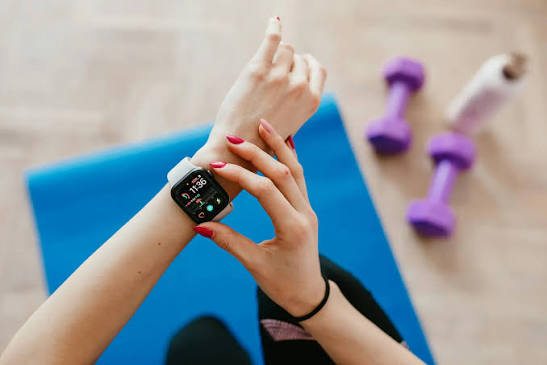
But there is an important distinction I want to make from the beginning. A smartwatch or smart ring cannot tell you how long you will live, and wearing one does not automatically make you healthier. What these devices can do is give you more information about your daily habits. That information can help you notice patterns, make better decisions and take your health more seriously.
For Nigerians who spend long hours working on laptops, running businesses, studying, creating content or dealing with irregular schedules, this can be especially useful. A wearable can remind you that you have barely moved all day, show that your sleep schedule has been inconsistent or help you understand how your body responds to exercise and rest.
In this guide, I will look at the best smartwatches and smart rings for sleep, recovery and general health tracking in 2026, and explain what each type of device is actually good for.
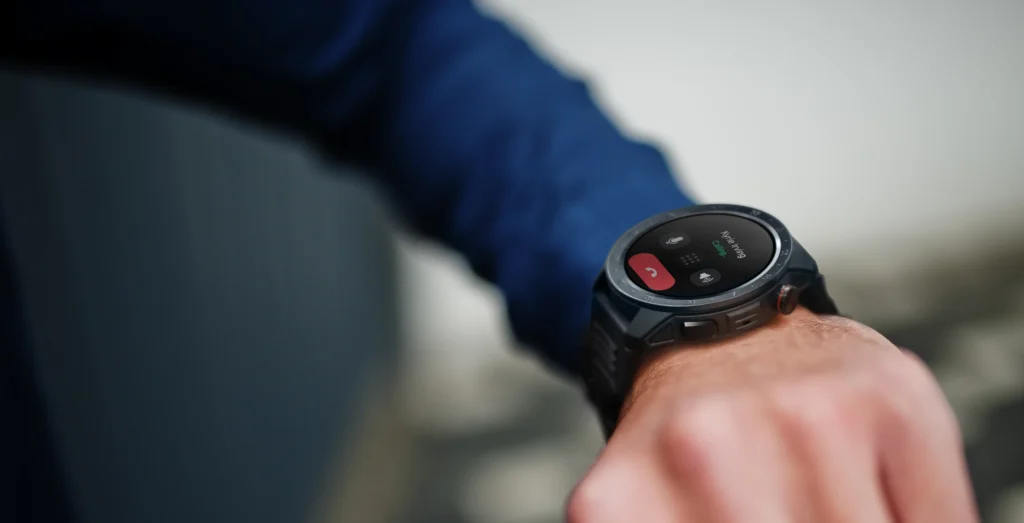
What Does “Wearable Tech for Longevity” Actually Mean?
When people hear the word longevity, they sometimes think of technology that can somehow make them live longer. That is not what I mean here.
Instead, think of wearable technology as a long-term health-awareness tool. You wear the device consistently, collect information and look for trends over time.
For example, you might notice that you sleep poorly whenever you work late into the night. You might discover that your resting heart rate changes after several stressful days. You could also see that you recover better when you include rest days between harder workouts.
That kind of feedback can encourage better habits.
This is similar to how I approach technology generally. The gadget itself is not the goal. The goal is what the gadget helps you do.
If you’re already interested in how technology affects everyday life in Nigeria, you may also want to read our article on how technology is changing Nigerian lifestyle.
What Health Metrics Should You Look For?
Not every wearable measures the same things. Before spending money, think about the information you actually want.
Sleep tracking
Good sleep is one of the most useful areas for wearable technology. Depending on the device, you may see sleep duration, sleep stages, sleep consistency, heart rate, blood oxygen information and other measurements.
The important thing is not to become obsessed with a single night’s score. Look at patterns over weeks and months.
Heart rate
Most modern watches and rings can continuously or periodically monitor heart rate. This can help you understand how your heart rate changes during exercise, rest and sleep.
Heart rate variability
HRV, or heart rate variability, is another metric increasingly used by recovery-focused wearables. Rather than simply showing your heart rate, HRV looks at variation between heartbeats.
Garmin, for example, uses overnight heart-rate measurements to establish an HRV status over time. Garmin notes that factors such as training, physical activity, sleep, nutrition and lifestyle can affect HRV.
That makes HRV more useful as a personal trend than as a number you should compare with somebody else.
Activity and movement
Steps, active minutes, workouts and other movement information can help you identify how active you actually are.
This matters particularly if your work keeps you sitting for several hours. A person can spend eight hours working on a laptop and still feel like they were busy all day without realizing how little they moved.
Recovery
Recovery tracking is becoming one of the biggest reasons people buy premium wearables. Instead of simply telling you what happened yesterday, some devices try to interpret your sleep, activity and body signals to estimate how prepared you may be for another demanding day.
Best Smart Ring for Sleep and Recovery: Oura Ring 5
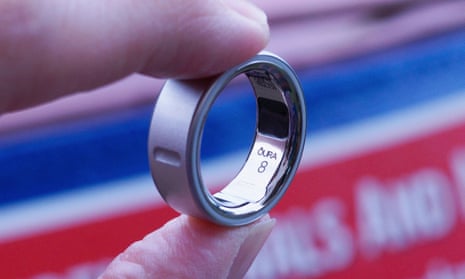
If your main priority is sleep, recovery and passive health tracking, the Oura Ring 5 is one of the strongest choices in 2026.
Unlike a smartwatch, it does not put a screen on your wrist. You simply wear the ring and review the information through its app.
Oura’s Readiness system combines information such as sleep, resting heart rate, HRV, body temperature and activity balance to provide an overall picture of recovery.
That approach makes the Oura Ring particularly interesting for people who do not care about receiving notifications on their wrist.
The latest Oura Ring 5 is also positioned as a premium health-focused ring. Current 2026 reporting says it tracks more than 50 biometric metrics, although the most useful experience depends heavily on the accompanying software and membership.
The biggest disadvantage? Cost. Oura requires a subscription for full access to many of its insights. That recurring expense is worth considering, especially if you are buying from Nigeria and already have to account for exchange rates, delivery and import-related costs.
For more information about Oura’s readiness system, you can visit the official Oura Readiness Score documentation.
Best for: Sleep tracking, recovery insights, passive monitoring and people who prefer a discreet wearable.
Best Smart Ring for Samsung Users: Samsung Galaxy Ring
If you already use a Samsung Galaxy smartphone, the Galaxy Ring makes a lot of sense.
Samsung designed the ring to work closely with its Galaxy ecosystem and Samsung Health. It can monitor sleep-related measurements including heart rate, blood oxygen and skin temperature while you sleep.
The Galaxy Ring also contributes to Samsung’s Energy Score system, which combines activity, sleep and heart-related information to provide a daily overview.
One advantage is that you do not necessarily need another screen on your wrist. You can let the ring collect information while your phone remains the main place where you review it.
However, compatibility matters. Some features depend on the connected Galaxy phone, Samsung account and region. Samsung also clearly states that its wellness features are not intended to diagnose, treat or prevent disease.
That is an important point for anyone shopping for health technology. A wearable can provide useful information, but it is not a replacement for a qualified healthcare professional.
Best for: Samsung Galaxy users, sleep tracking, passive health monitoring and people who want a ring without a recurring Oura-style subscription.
You can check Samsung’s official Galaxy Ring sleep-tracking guide for more information.
Best Smartwatch for Serious Recovery and Fitness: Garmin Forerunner 970
If you want something more serious than a sleep tracker, the Garmin Forerunner 970 deserves attention.
This is a premium multisport smartwatch rather than a simple lifestyle tracker. It is particularly attractive to runners, cyclists, swimmers, triathletes and people who want detailed training information.
The watch provides extensive health and recovery information, including HRV, sleep, VO2 max, endurance and recovery-related data. Current testing also highlights its broad range of sport profiles and long battery life compared with many traditional smartwatches.
Garmin’s approach is different from Oura’s. Oura is heavily focused on wellness, sleep and recovery insights, while Garmin puts much more emphasis on training and performance.
If you are training for a race or regularly participate in demanding workouts, that difference matters.
Garmin also explains that the Forerunner 970 needs consistent sleep data before it can establish a meaningful HRV baseline.
That is actually a useful lesson about wearable technology in general: the longer you wear the device consistently, the more useful your personal trends can become.
Best for: Athletes, runners, serious fitness users and people who want detailed recovery and training data.
You can read the official Garmin Forerunner 970 manual for the complete feature information.
Best Android Smartwatch for General Health Tracking: Google Pixel Watch
For Android users who want a proper smartwatch rather than a ring, Google’s Pixel Watch line is another strong option.
The attraction here is the combination of smartwatch functions and Fitbit-powered health tracking. Current 2026 comparisons place Google’s Pixel Watch among the strongest Android smartwatch options for users who want health features alongside notifications, apps and everyday smartwatch functions.
This makes it different from Oura. You are not buying the Pixel Watch purely for sleep and recovery. You are buying a complete smartwatch that also happens to provide substantial health and fitness tracking.
For someone who wants messages, apps, workouts and health information on the same device, that can be a better fit.
The trade-off is charging. Smartwatches with bright displays and many active features generally need charging more frequently than simple rings or screenless trackers.
Best for: Android users who want health tracking plus a full smartwatch experience.
What About Apple Watch?
Apple Watch remains an important option for people who use an iPhone.
The major advantage is the Apple ecosystem. If your phone, earbuds, computer and other devices are already connected to Apple services, the watch can become a natural extension of that setup.
However, I would not recommend buying an Apple Watch simply because someone says it has more health features. The right choice depends heavily on your phone and the features you actually need.
If you use Android, buying into the Apple Watch ecosystem simply for health tracking does not make much sense.
Smart Ring vs Smartwatch: Which Is Better?
| Feature | Smart Ring | Smartwatch |
|---|---|---|
| Sleep tracking | Excellent for passive overnight tracking | Very good, depending on model |
| Recovery insights | Excellent on health-focused rings | Excellent on premium fitness watches |
| Workout information | More limited | Much stronger |
| GPS | Usually limited or dependent on phone | Common on advanced models |
| Notifications | Generally unavailable | Common |
| Battery life | Often several days | Ranges from roughly a day to multiple days depending on model |
| Distraction | Very low | Higher because of the screen |
The choice therefore depends on your priorities.
If you mainly want sleep and recovery, I would lean toward a smart ring.
If you want workouts, GPS, notifications and a complete wearable computer, choose a smartwatch.
Some people may even eventually use both, although that is certainly not necessary for most people.
Why Sleep Tracking May Be More Valuable Than Another Fitness Score
One thing I have noticed about wearable technology is how easy it is to become obsessed with numbers.
You can wake up and immediately check your sleep score. Then you check your readiness score. Then your HRV. Then your resting heart rate. Before you know it, you are spending more time studying the wearable than improving your habits.
That defeats the purpose.
The most useful approach is to use the information as a guide.
If your watch repeatedly shows that you are sleeping too little, the answer is probably not to buy another watch. The answer is to examine your schedule.
If your recovery data consistently suggests that you are not recovering well after intense exercise, that may be a reason to reconsider your training routine and, where appropriate, discuss concerns with a healthcare professional.
The device should support your decisions, not control them.
Wearables Are Especially Useful for Remote Workers
This is an area I think deserves more attention.
People working remotely can easily spend most of the day sitting in front of a laptop. You might start work in the morning, answer messages, write articles, attend meetings and continue working until evening without realizing how little you have moved.
A wearable can make that invisible behaviour more visible.
If you’re interested in remote work and digital income, check out our guide on using a laptop to earn in dollars as a virtual assistant in Nigeria. The more time we spend working with technology, the more important it becomes to think about how technology affects our daily routines.
You can also read our article about managing remote teams using Trello and Slack.
Don’t Forget Battery Life
Battery life sounds like a boring specification until you start tracking sleep.
If your smartwatch needs charging every night and you normally charge it while sleeping, you may lose the very data you bought the watch to collect.
That is one reason smart rings can be attractive. They are designed to stay on your finger for long periods, making overnight tracking easier.
On the smartwatch side, battery performance varies significantly. Current 2026 comparisons highlight models such as the OnePlus Watch 3 for unusually long battery life, while other feature-rich smartwatches may require much more frequent charging.
So when buying a wearable, do not only ask, “What can it measure?” Ask, “Will I actually wear it consistently?”
Privacy Is Another Important Consideration
Health-related information is personal information.
Before buying a wearable, check what information the company collects, where it is stored, how long it is retained and what controls you have over your account.
This is particularly important when a device connects to cloud services. Your sleep history, activity patterns and other measurements may be stored in an app rather than exclusively on the wearable itself.
I recommend reading the manufacturer’s privacy documentation before buying, especially if you plan to wear the device every day for years.
And if you’re interested in protecting your personal information generally, our guide on cybersecurity in Nigeria is a useful place to start.
How Much Should You Spend?
You do not need the most expensive wearable to start tracking your health habits.
If your main goal is simply to understand your sleep, daily movement and basic heart-rate trends, an affordable fitness tracker may be enough.
Move up to a premium smartwatch if you need GPS, detailed workout information, navigation, apps and broader fitness features.
Consider a premium smart ring if sleep and recovery are your biggest priorities and you prefer a discreet device.
For Nigerian buyers, I would also consider warranty availability, replacement costs, official support, charging accessories and the availability of the accompanying app in your region. A device that looks cheap initially can become expensive if accessories are difficult to replace.
My Picks at a Glance
- Best smart ring for sleep and recovery: Oura Ring 5
- Best smart ring for Samsung users: Samsung Galaxy Ring
- Best premium fitness and recovery smartwatch: Garmin Forerunner 970
- Best Android smartwatch experience: Google Pixel Watch
- Best for iPhone users: Apple Watch
- Best for simple, passive tracking: A health-focused smart ring or screenless tracker
What I Would Choose
If I were choosing specifically for sleep and long-term health awareness, I would start with a smart ring. The lack of a screen is actually an advantage because it removes much of the distraction associated with smartwatches.
For serious exercise and recovery, however, I would choose a Garmin-style sports watch because the training tools are considerably more comprehensive.
For someone who wants one device that does almost everything, a modern smartwatch is probably the better choice.
Ultimately, the best wearable is not necessarily the one with the longest specification sheet. It is the one you will comfortably wear consistently and whose information you can turn into sensible habits.
Final Thoughts: Can Wearable Technology Really Help With Longevity?
Potentially, but indirectly.
A smart ring cannot make you live longer. A smartwatch cannot guarantee good health. And a recovery score should never be treated as a medical diagnosis.
What these devices can do is make certain parts of your lifestyle easier to observe.
You can see whether you’re getting enough sleep. You can monitor your activity. You can notice changes in personal trends. You can use workout and recovery information to structure your training more intelligently.
That information can support better decisions over time.
And that is where I think wearable technology becomes genuinely interesting. The future of wearables is not simply about putting more sensors into a watch or ring. It is about turning long-term personal data into information that helps people understand their habits.
If you enjoy exploring useful technology and digital tools, don’t forget to visit the Infolandia Bookstore as well. The goal should always be the same: use technology as a tool to improve what you already do, rather than buying gadgets simply because they are new.
One final reminder: treat wearable measurements as wellness information, not a diagnosis. If you have persistent symptoms or concerns about your health, speak with an appropriate healthcare professional rather than relying on a smartwatch or smart ring.