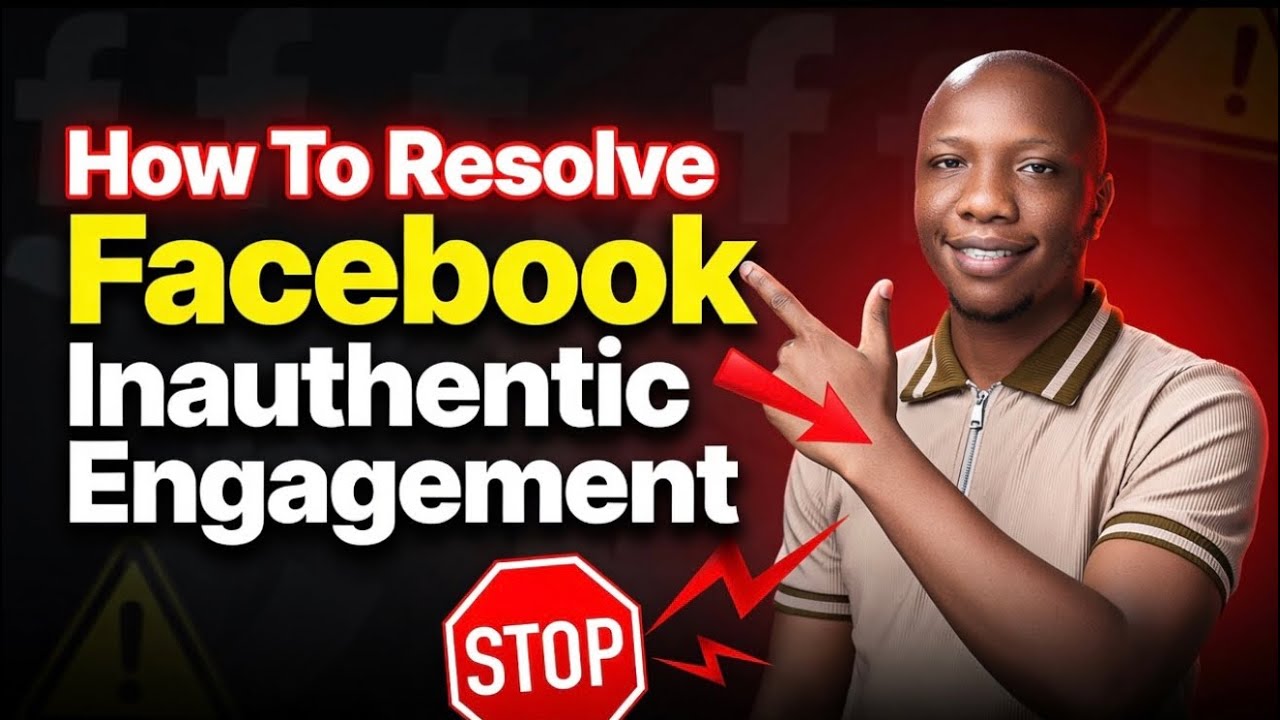
I am sharing my experience because other creators may find themselves in a similar situation. I cannot say that I know exactly what triggered Facebook’s system because the notification did not identify every specific action that caused the enforcement. However, the experience taught me several lessons about Facebook content, engagement and monetization.

What Does Inauthentic Engagement Mean on Facebook?
Inauthentic engagement generally refers to activity that a platform considers artificial, manipulated or designed to create engagement that does not represent genuine audience interest.
Facebook engagement can include reactions, comments, shares, follows and other interactions with content. A creator may therefore become concerned when Facebook identifies unusual activity around a page or its content.
Importantly, receiving an inauthentic engagement warning does not automatically prove that a creator deliberately manipulated engagement. Facebook uses automated systems and other enforcement processes to identify potential policy violations, and creators may not always receive a detailed explanation of the exact activity that triggered a warning.
That distinction matters. I do not want to claim that I knowingly engaged in manipulation when I did not have a clear explanation from Facebook identifying the exact cause.

How Facebook Flagged My Page
My experience started with normal Facebook page management. I created content, published posts and reels, and tried to build an audience around the page.
At some point, Facebook flagged the page for inauthentic engagement. The notification immediately made me start reviewing the activity on the page because I wanted to understand what had happened.
The frustrating part was the lack of a simple explanation that pointed directly to one specific action.
I had several questions:
- Which post caused the problem?
- Did Facebook identify unusual engagement on a particular reel?
- Did a particular pattern of interactions trigger the system?
- Was the issue related to content or engagement?
- Would removing the affected content resolve the restriction?
Without a clear answer to those questions, I had to approach the situation carefully rather than simply guessing.
I Deleted the Reels Facebook Flagged
One of the practical steps I took was to remove reels that Facebook had flagged.
Deleting content that you have spent time creating is never an easy decision. A creator can spend hours planning, editing and publishing a video, only to remove it later because of a platform policy issue.
Still, the experience reminded me that a creator should take platform warnings seriously. Leaving questionable content online simply because it has already attracted views may create additional problems.
At the same time, deleting a post does not necessarily erase an existing enforcement action. If Facebook has already restricted an account or page, the creator still needs to check the account status and follow any review or appeal process that Facebook provides.
The Monetization Problem Made It More Serious
The situation became more stressful because monetization was involved.
When you manage a page purely for entertainment, losing reach can be frustrating. When you also depend on the page for income, a policy problem can become a financial concern.
That was one of the biggest lessons I took from the experience.
Facebook creators should not focus only on views, followers and reactions. They also need to understand the rules surrounding monetization and content eligibility.
Meta publishes policies for monetization and explains that policy enforcement can affect a publisher’s ability to monetize. Its published guidance also emphasizes maintaining a quality experience for users and advertisers. Meta’s policy guidance provides more information about these principles.
Why the Experience Was So Confusing
The uncertainty caused most of the frustration.
When a platform tells you that your engagement looks inauthentic, you naturally want to know exactly what went wrong. You want a clear explanation and a specific action that will fix the problem.
Instead, creators sometimes have to work with limited information.
That situation can lead to unnecessary assumptions. A creator may immediately blame a particular post, another person or even a normal audience interaction without having evidence that any of those things caused the problem.
For that reason, I think creators should separate what Facebook actually tells them from what they think might have happened.
In my case, I know that Facebook flagged my page for inauthentic engagement. I also know that I removed flagged reels. However, I cannot honestly say that Facebook told me one specific action caused the entire problem.
High Engagement Does Not Always Mean a Healthy Page
Before this experience, it was easy to look at engagement numbers as the main measurement of success.
More views looked better. More comments looked better. More shares looked better.
However, creators should look beyond the numbers.
A healthy page needs an audience that genuinely wants the content. A large number of interactions means little if the activity appears artificial or violates platform rules.
That is why I now believe creators should prioritize genuine audience interest over impressive engagement numbers.
If people naturally enjoy a post, they may comment, share it or react to it without the creator having to manipulate the process.
What I Would Do Differently Now
This experience changed the way I think about Facebook page management.
I would pay closer attention to every policy notification and review content more carefully before publishing it.
I would also avoid anything that could make engagement appear artificial or manipulated.
Most importantly, I would not treat engagement as the only goal. Building a trustworthy audience matters more than producing a large number of interactions for a single post.
Creators who are also building websites should apply the same principle to their broader digital strategy. I previously wrote about content creation in Nigeria and making money online, and the same lesson applies here: sustainable growth requires more than chasing numbers.
Be Careful With Engagement-Boosting Services
One obvious lesson from any inauthentic engagement problem is to stay away from questionable services that promise instant likes, followers, comments or shares.
Fast growth can look attractive when a page is struggling to gain attention. However, creators should consider whether the audience they receive actually cares about their content.
A page with fewer genuine followers can have a healthier community than a page with a much larger audience that rarely interacts naturally.
Creators should therefore concentrate on content that gives people a reason to follow the page in the first place.
Do Not Confuse Normal Promotion With Fake Engagement
There is also an important difference between promoting content and manipulating engagement.
Legitimate promotion aims to introduce content to a relevant audience. Artificial engagement attempts to make a post appear more popular than it genuinely is.
That distinction matters for creators who use Facebook as part of a wider digital marketing strategy.
If you are learning digital marketing, for example, understanding the difference between audience growth and engagement manipulation can help you make better decisions. My guide on digital marketing in Nigeria covers other ways people can develop useful digital marketing skills.
Do Not Panic After Receiving a Policy Warning
A policy notification can make you want to change everything immediately.
You may feel tempted to delete your entire content library, stop posting or create another page.
I would recommend taking a calmer approach.
Start by reading the notification carefully. Identify what Facebook says it has restricted or flagged. Then review the affected content and check whether Facebook provides an appeal, review or account-status option.
Do not rely on random advice from people promising a guaranteed way to remove a restriction. Account enforcement depends on the specific circumstances, so nobody outside Facebook can honestly guarantee that a particular trick will restore a page.
Deleting Content Does Not Guarantee an Immediate Recovery
Removing a flagged post can be a sensible step when the platform identifies that content as problematic. However, creators should not assume that deletion automatically resets the account.
Facebook may keep an enforcement action on an account even after the creator removes the content that caused concern.
Therefore, check your account status after making changes instead of assuming that everything has returned to normal.
This is particularly important when monetization is involved.
Why Facebook Monetization Requires Extra Care
Once a page starts earning money, policy compliance becomes even more important.
Creators should understand the rules that apply to the content they publish and the monetization features they use.
Meta’s published policy guidance explains that violations can affect monetization and recommends reviewing its content monetization and partner monetization policies. You can read Meta’s policy guidance here.
Meta also provides information about its monetization products and publisher requirements through its official Audience Network resources.
The exact monetization rules can change over time, so creators should always check Meta’s current policies instead of relying only on old tutorials or social media advice.
Build an Audience Outside Facebook Too
My experience also reminded me that creators should avoid putting their entire online presence in the hands of one platform.
Facebook can be an excellent source of traffic and audience growth, but the platform controls the account, algorithm and monetization system.
A creator who also owns a website has another place to publish content and communicate with an audience.
For anyone considering this approach, my guide on creating a website in 2026 explains some of the basics of establishing an online presence.
You can also build an email audience, maintain other legitimate social channels and keep backups of your original videos and images.
These steps cannot prevent a Facebook restriction, but they can reduce your dependence on one platform.
Keep Copies of Your Original Content
Another lesson I learned is the importance of keeping copies of your original work.
Do not rely on Facebook as the only place where your videos, images and written content exist.
Save your original files somewhere secure. If you have a website, you can also publish important material there.
This approach gives you more control over your work and makes it easier to continue creating content if something happens to a social media account.
What Facebook Creators Should Watch Out For
My experience does not mean that every creator will receive the same warning. Still, the situation taught me to take several areas more seriously.
- Focus on genuine audience interaction.
- Avoid services that promise artificial followers or engagement.
- Review your content before publishing it.
- Pay attention to Facebook policy notifications.
- Do not assume that high engagement automatically means healthy engagement.
- Keep copies of your original content.
- Understand the rules that apply to monetized content.
- Use Facebook’s official review and appeal options when they are available.
- Build other legitimate channels for reaching your audience.
My Biggest Lesson From the Experience
The biggest lesson I learned is simple: do not build your entire online strategy around engagement numbers.
Build around trust.
Build around useful content.
Build around people who genuinely want to hear from you.
That approach may take longer, but it gives you a stronger foundation.
My other content about making money online in Nigeria also follows this broader principle: sustainable online income usually requires real skills, useful content and a legitimate audience rather than shortcuts.
What I Learned About Depending on Social Media Income
The incident also made me think differently about online income.
When a creator earns from one platform, the creator does not completely control the business.
A change in policy, an account restriction, a technical problem or an algorithm change can affect income.
That does not mean creators should stop using Facebook. Instead, it makes sense to develop additional skills and income channels.
For example, digital marketing, website management, content creation, freelancing and other online skills can provide opportunities beyond one social network. I have also covered how to start freelancing in Nigeria for readers interested in developing another online skill.
Should You Be Worried If Facebook Flags Your Page?
You should take the notification seriously, but you should not automatically assume that your page has reached the end.
The correct response depends on the exact restriction Facebook places on the account and the information included in the notification.
Review the affected content, check your account status and use the official review process when Facebook provides one.
Most importantly, avoid panic-driven decisions. Do not start creating multiple accounts simply because one page has received a warning, and do not look for shortcuts that promise to bypass Facebook’s enforcement systems.
Final Thoughts
My experience with Facebook’s inauthentic engagement warning was frustrating. I had spent time creating content and building the page, so seeing Facebook flag the account was difficult.
Deleting flagged reels added another layer of frustration, while the possible effect on monetization made the situation even more serious.
However, the experience gave me a better understanding of how important platform policies are.
Creators often spend most of their time thinking about content ideas, followers, views and engagement. Those things matter, but policy compliance matters too.
I also learned that creators should not automatically assume they know why Facebook’s system flagged something. If Facebook does not identify the exact cause, it is better to describe the situation honestly rather than make unsupported claims.
For me, the biggest takeaway is this: build genuine engagement, understand the rules, protect your original content and avoid depending completely on one platform.
Facebook remains a powerful platform for reaching an audience, but your long-term digital presence should extend beyond Facebook.