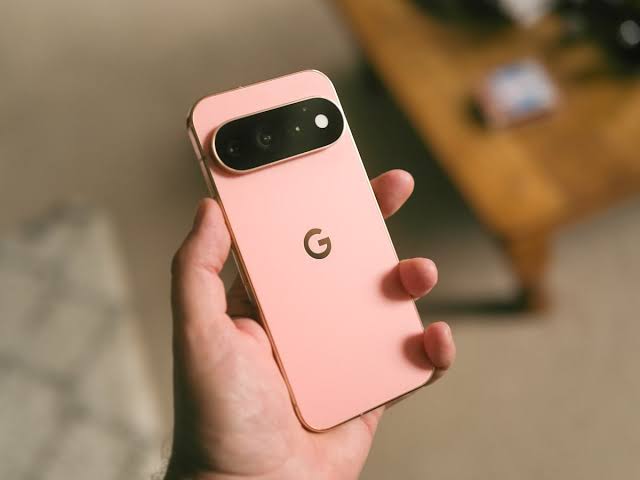
The Google Pixel 11 Pro is Google’s latest premium Pixel smartphone for 2026, bringing together a new Tensor G6 processor, upgraded cameras, Google’s latest Gemini-powered features, a brighter LTPO OLED display, improved battery performance, and a redesigned approach to notifications through the new HiLight system.
Unlike some flagship phones that compete primarily through raw hardware specifications, Google’s Pixel strategy continues to focus heavily on photography, artificial intelligence, Android software, security, and the way these features work together.
The Pixel 11 Pro starts with 256GB of storage and 12GB of RAM, while higher-capacity versions offer 16GB of RAM. Google also gives the Pro model a triple rear-camera system consisting of a 50MP main camera, 48MP ultrawide camera, and 48MP 5x telephoto camera.
For Nigerian buyers, however, specifications are only part of the buying decision. Local pricing, availability, network compatibility, warranty support, software features, battery life, and the cost of importing a Pixel all deserve attention.
In this guide, we take a detailed look at the Google Pixel 11 Pro, including its design, display, Tensor G6 performance, cameras, battery, AI features, storage options, security, and what you should know before buying one in Nigeria.

Google Pixel 11 Pro at a Glance
| Feature | Google Pixel 11 Pro |
|---|---|
| Display | 6.3-inch Super Actua LTPO OLED |
| Resolution | 1280 × 2856 |
| Refresh rate | 1Hz–120Hz adaptive |
| Peak brightness | Up to 3,600 nits |
| Processor | Google Tensor G6 |
| Security chip | Titan M3 |
| RAM | 12GB or 16GB depending on storage |
| Storage | 256GB, 512GB or 1TB |
| Main camera | 50MP |
| Ultrawide camera | 48MP |
| Telephoto camera | 48MP 5x optical zoom |
| Maximum Pro Zoom | Up to 120x |
| Front camera | 42MP autofocus |
| Battery | 4,850mAh typical |
| Wired charging | Up to 55% in about 30 minutes with compatible charger |
| Wireless charging | Pixelsnap Qi2.2 up to 25W |
| Connectivity | 5G, Wi-Fi and Bluetooth |
Google’s official specification page provides the complete hardware details for the Pixel 11 Pro and Pixel 11 Pro XL. You can check the official Google Pixel 11 Pro specifications before purchasing.
Google Pixel 11 Pro Design
The Pixel 11 Pro retains Google’s recognizable Pixel design language while refining the camera bar and overall appearance.
Google offers the phone in Canyon, Olive, Fog, and Obsidian. The Obsidian version uses an all-matte finish, while the other colours give buyers more options if they want something different from the traditional black-looking flagship.
The Pixel 11 Pro measures approximately 6 inches tall, 2.8 inches wide and 0.3 inches thick. Google lists the weight at about 7.2 ounces, or roughly 204 grams.
That makes it substantially easier to handle than the larger Pixel 11 Pro XL while still offering flagship hardware.
The smaller 6.3-inch form factor may also appeal to people who want a premium phone without carrying a very large device every day.
6.3-Inch Super Actua Display
The Pixel 11 Pro uses a 6.3-inch Super Actua LTPO OLED display with a 1280 × 2856 resolution.
The display supports an adaptive refresh rate ranging from 1Hz to 120Hz. The ability to reduce the refresh rate when high refresh performance is unnecessary can help balance smoothness and power consumption.
Google lists up to 2,400 nits of HDR brightness and up to 3,600 nits of peak brightness.
That is particularly useful when using the phone outdoors. Bright sunlight can make smartphone displays difficult to read, so high brightness can make a meaningful difference for navigation, photography, messaging, and general outdoor use.
The screen also uses Corning Gorilla Glass Victus 2 with an anti-scratch shield.
Tensor G6 Performance
The Pixel 11 Pro is powered by Google’s Tensor G6 processor.
Google designed Tensor chips with a strong emphasis on machine learning and Google’s software features. That approach continues with the Pixel 11 Pro, where AI features are integrated throughout the operating system and camera experience.
Google says the Tensor G6 powers its latest Gemini Nano model and helps deliver faster AI experiences on the device.
Independent testing has found that the Pixel 11 Pro performs reliably in everyday use, although its benchmark positioning is not necessarily the same as some flagship phones built primarily around maximum raw processing performance. TechRadar’s review similarly notes the phone’s strong day-to-day performance and its emphasis on software and AI.
Read the TechRadar Pixel 11 Pro review for additional independent testing.
12GB or 16GB RAM?
Google offers the Pixel 11 Pro with different memory configurations depending on storage.
- 256GB: 12GB RAM.
- 512GB: 16GB RAM.
- 1TB: 16GB RAM.
The 256GB model should be enough for many people who primarily use their phone for photography, messaging, streaming, social media, browsing, and everyday productivity.
However, creators who record lots of high-resolution video may prefer 512GB or 1TB. Those configurations also come with 16GB of RAM, which provides additional headroom for multitasking.
Because the Pixel 11 Pro does not provide a traditional microSD expansion slot, choosing your storage capacity carefully is important.

Pixel 11 Pro Camera System
Photography remains one of the most important reasons to consider a Pixel Pro smartphone.
The Pixel 11 Pro has a triple rear-camera system:
- 50MP wide camera with an f/1.68 aperture.
- 48MP ultrawide camera with autofocus and Macro Focus.
- 48MP telephoto camera with 5x optical zoom and optical image stabilization.
Google combines these cameras with computational photography and AI-powered processing.
50MP Main Camera
The 50MP wide camera uses a relatively large 1/1.3-inch sensor and an f/1.68 aperture.
The larger sensor gives the camera more physical area to capture light, while Google’s image-processing algorithms handle much of the computational side of photography.
This combination is useful for everyday photography because the phone can process exposure, colour, detail, noise, and dynamic range automatically.
Pixel phones have historically been particularly focused on computational photography, and Google continues that approach with the Pixel 11 generation.
48MP Ultrawide Camera and Macro Focus
The 48MP ultrawide camera provides a 123-degree field of view and autofocus.
That makes it useful for photographs where you need to capture more of the scene. Buildings, landscapes, group photographs, interiors, and travel scenes are examples where an ultrawide camera can be more useful than the main lens.
Autofocus also enables Macro Focus, allowing the phone to focus on subjects at close distances.
For people who photograph products, flowers, food, documents, small objects, or details around a construction site, the macro capability can add another useful option.
48MP 5x Telephoto Camera
The third rear camera is a 48MP telephoto lens with 5x optical zoom.
Optical zoom is useful because it allows you to get closer to a distant subject without relying solely on digital enlargement.
The telephoto camera also includes optical image stabilization, which helps reduce the effect of hand movement when shooting at longer focal lengths.
Google combines its optical cameras with computational zoom technology and lists Pro Zoom up to 120x.
However, maximum digital zoom numbers should always be interpreted carefully. A 120x mode does not mean that photographs at 120x will contain the same level of detail as images captured with a native optical lens.
AI Photography Features
The Pixel 11 Pro introduces several software features designed around Google’s AI systems.
These include:
- Magic Capture.
- Camera Looks.
- Camera Coach.
- High-Resolution photography.
- High-Resolution Portrait Mode.
- Night Sight.
- Astrophotography.
- Macro Focus.
- Best Take.
- Face Unblur.
- Auto Unblur.
- Long Exposure.
- Action Pan.
Magic Capture is particularly interesting because it can use AI to identify useful moments from video and turn selected frames into high-resolution HDR photographs.
Google has also introduced Camera Looks, giving users more control over the visual style of their photographs instead of relying entirely on the phone’s default processing.
42MP Selfie Camera
The front-facing camera has a 42MP sensor with autofocus and a 103-degree field of view.
The wide field of view can be useful for group selfies and video calls, while autofocus can help keep the subject sharp at different distances.
The camera also supports Google’s software-based photography features, making it useful for social media, video calls, personal photography, and content creation.
Pixel 11 Pro for Video Creators
The Pixel 11 Pro can serve as a capable mobile content-creation device.
Its cameras cover multiple focal lengths, while the Tensor G6 processor provides the computational power required for Google’s image and video processing features.
The large storage options are also helpful for creators. If you regularly shoot video, however, 512GB or 1TB may be more practical than 256GB.
Our guide to smartphone requirements for video editing explains why storage, RAM, processor performance, and battery life matter when choosing a phone for content creation.
30+ Hours of Battery Life
Google lists 30+ hours of battery life for the Pixel 11 Pro.
The phone has a typical 4,850mAh battery, with a minimum capacity of 4,707mAh according to Google’s specifications.
Battery performance will naturally vary depending on brightness, mobile-network conditions, gaming, camera usage, video recording, GPS, background applications, and other factors.
The Pixel 11 Pro also introduces Extreme Charging Mode, designed to prioritize charging speed when you need to get more battery quickly.
Google says the phone can reach up to 55% in about 30 minutes when using a compatible 30W USB-C PPS charger or higher.
Wireless charging is also supported through Pixelsnap, with Qi2.2-certified wireless charging up to 25W.
Pixel 11 Pro for Nigerian Users
There are several things Nigerian buyers should check before importing or purchasing the Pixel 11 Pro.
First, confirm the exact regional model. Pixel phones can have different cellular configurations depending on market.
Second, check warranty arrangements. If you purchase an imported device from a local retailer, find out exactly who handles warranty claims if something goes wrong.
Third, consider Google’s availability of specific services in your region. Some Pixel features can vary by country, language, account, or service availability.
Finally, compare the total Nigerian purchase price rather than converting Google’s US price directly into naira. Import costs, exchange rates, retailer margins, taxes, and shipping can all affect the final price.
Google Pixel 11 Pro Price
The Pixel 11 Pro launched with a $1,099 starting price for the 256GB model in the United States.
The 512GB model launched at $1,219, while the 1TB version launched at $1,449.
Those are official US launch prices and should not be treated as Nigerian retail prices. The amount you actually pay in Nigeria can be considerably different depending on the seller and import costs.
Google’s official store currently lists the Pixel 11 Pro and its available configurations, so it is worth checking the official Google Pixel 11 Pro store page before buying.
Pixel 11 Pro Security
Security is another major part of Google’s Pixel strategy.
The Pixel 11 Pro includes Google’s Titan M3 security chip alongside the Tensor G6 processor and other hardware security components.
Google also highlights quantum-safe secure boot, anti-malware protection, anti-phishing features, spam protection, and other security technologies.
For someone using a phone for banking, work, cloud storage, photographs, passwords, and personal documents, these security features matter just as much as camera specifications.
You can learn more about staying safe online in our guide to cybersecurity in Nigeria.
Gemini and Pixel 11 Pro AI Features
Artificial intelligence is deeply integrated into the Pixel 11 Pro experience.
Google’s latest Gemini features can assist with tasks across supported applications, while the Tensor G6 processor helps run on-device AI features.
Google has also introduced Gemini Proactive Assistance, which is designed to help users with certain tasks by using information from supported applications and services.
These features require appropriate permissions and service availability. AI capabilities can also change as Google updates its software.
That distinction matters because a phone’s advertised AI capabilities may expand or change after purchase through software updates.
HiLight: A Different Kind of Notification
The Pixel 11 Pro introduces HiLight, a multi-colour LED system integrated around the camera area.
Instead of requiring you to constantly look at the display for every notification, HiLight can provide visual signals in supported situations.
Google positions the feature as a way to keep users informed without demanding constant screen attention.
The feature is also visually distinctive because it gives the rear camera area another function beyond photography.
Pixel 11 Pro vs Pixel 11
The standard Pixel 11 and Pixel 11 Pro share the Tensor G6 platform, but the Pro model offers a more advanced camera system and display.
The Pixel 11 Pro has a 50MP main camera, 48MP ultrawide, and 48MP 5x telephoto. The standard Pixel 11 uses a 48MP main camera, 13MP ultrawide, and 10.8MP 5x telephoto.
The Pro also has the higher-resolution LTPO display, 42MP autofocus selfie camera, and higher storage and RAM options.
The standard Pixel 11 can therefore make sense for buyers who want the Pixel software experience without paying for all the Pro hardware.
Pixel 11 Pro vs Pixel 11 Pro XL
The Pixel 11 Pro and Pixel 11 Pro XL share many of their core specifications.
The biggest physical difference is the display size. The Pro has a 6.3-inch screen, while the Pro XL uses a 6.8-inch panel.
The XL also has a larger 5,115mAh typical battery and faster wired charging, with Google listing up to 75% in around 30 minutes using a compatible 45W USB-C PPS charger or higher.
If you prefer a phone that is easier to handle, the Pixel 11 Pro is the smaller option. If screen size and battery capacity are more important, the Pro XL provides the larger format.
Pixel 11 Pro for Photography
Photography is arguably the clearest reason to choose the Pro model over the standard Pixel 11.
The combination of the 50MP main camera, 48MP ultrawide, 48MP 5x telephoto, Google’s computational photography, and AI editing tools gives photographers a versatile system.
The camera is also useful for people who photograph buildings, products, travel locations, events, people, food, and everyday scenes.
For Nigerian users interested in smartphone photography, the Pixel 11 Pro can be particularly useful when travelling because one device can cover wide, standard, portrait, macro, and telephoto photography.
You can compare it with other devices in our App & Product Reviews category.
Pixel 11 Pro for Students and Professionals
The Pixel 11 Pro has enough performance for demanding everyday productivity.
Students can use it for research, document reading, cloud storage, video calls, photography, note-taking, and communication.
Professionals can use it for email, meetings, photography, document management, mobile editing, and other productivity tasks.
If you are buying a phone specifically for university use, our best phones for university students in Nigeria guide provides additional buying considerations.
Useful Accessories for the Pixel 11 Pro
A flagship smartphone deserves a suitable accessory setup.
- Protective case: useful for protecting the phone from accidental drops.
- Screen protector: adds another layer of physical protection.
- USB-C charger: useful if your phone package does not include the charger you need.
- USB-C cable: important for reliable charging and data transfer.
- Power bank: useful for travel and long workdays.
You can explore compatible smartphone accessories through Shopinverse. This is a referral link, meaning Infolandia may earn a commission from qualifying purchases.
Should You Buy 256GB, 512GB or 1TB?
For most people, 256GB should be sufficient.
Choose 512GB if you frequently record video, take large numbers of photographs, download offline media, or keep many files directly on your phone.
The 1TB model is designed for users who know they need very large local storage. It can be useful for professional content creators, but it also carries a significant price premium.
Remember that cloud storage can supplement your phone’s internal storage. However, cloud storage should not be treated as an excuse to buy too little local storage if your workflow regularly involves large files.
What Makes the Pixel 11 Pro Different?
Google’s approach is different from manufacturers that compete mainly through charging speed, huge batteries, or extremely high megapixel numbers.
The Pixel 11 Pro combines Google’s own Tensor hardware with Android, Gemini, computational photography, security technology, and Google’s software ecosystem.
The result is a phone where many of the important features are software-driven.
That also means software updates are particularly important. A Pixel can gain new capabilities after launch through updates, so the phone’s experience may continue evolving after you buy it.
Is the Google Pixel 11 Pro Worth It?
The answer depends on what you want from a flagship smartphone.
The Pixel 11 Pro offers a compact premium design, a bright 6.3-inch LTPO OLED display, Tensor G6 performance, a versatile triple-camera system, extensive AI features, strong security hardware, and multiple storage options.
Its camera system is particularly important. The 5x telephoto, 48MP ultrawide, 50MP main camera, Macro Focus, Camera Looks, Magic Capture, and Google’s computational photography tools give the phone plenty of photographic flexibility.
On the other hand, buyers who care primarily about maximum benchmark performance may want to compare the Tensor G6 against competing flagship processors before deciding.
Likewise, Nigerian buyers should check local pricing carefully. The official US starting price is not the same as the final Nigerian retail price.
Final Thoughts
The Google Pixel 11 Pro represents Google’s latest interpretation of a premium Android smartphone in 2026.
Rather than relying solely on raw specifications, Google has built the phone around the combination of cameras, AI, Android software, security, and everyday assistance.
The 6.3-inch LTPO OLED display is bright and high resolution. Tensor G6 provides the processing platform for Google’s latest AI features. The 50MP main camera, 48MP ultrawide and 48MP 5x telephoto create a flexible photography system, while the 4,850mAh battery and 30+ hour claimed battery life make the phone suitable for long days of normal use.
Storage is another important consideration. The 256GB model provides a reasonable starting point, while 512GB and 1TB versions make more sense for people who record a lot of video or keep large collections of files locally.
For Nigerian buyers, check the exact model, network compatibility, warranty arrangements, current local price, and availability before paying for the device.
If you are comparing the Pixel 11 Pro with other premium smartphones, start with our 2026 smartphone buying guide for Nigeria. You can also read our individual reviews of phones such as the Samsung Galaxy S26 Ultra to compare different flagship approaches.
For more technology guides, smartphone reviews, digital skills tutorials, and Nigerian-focused buying advice, explore App & Product Reviews and Digital Skills & Tutorials.
Affiliate disclosure: Some links in this article are affiliate or referral links. If you purchase an eligible product or course through one of these links, Infolandia may receive a commission at no additional cost to you. We include affiliate links where they are relevant to the subject, but you should always review the current price, specifications, seller, warranty, and suitability before purchasing.