Artificial intelligence has moved beyond simply answering questions. Modern AI systems can now help people research information, write content, analyze data, use software, and complete multi-step tasks. The next development attracting increasing attention is agentic AI.
But what exactly does agentic AI mean? Is it simply another name for ChatGPT? Can an AI agent actually perform tasks for you? And why are businesses, developers, students, and professionals paying attention to this technology?
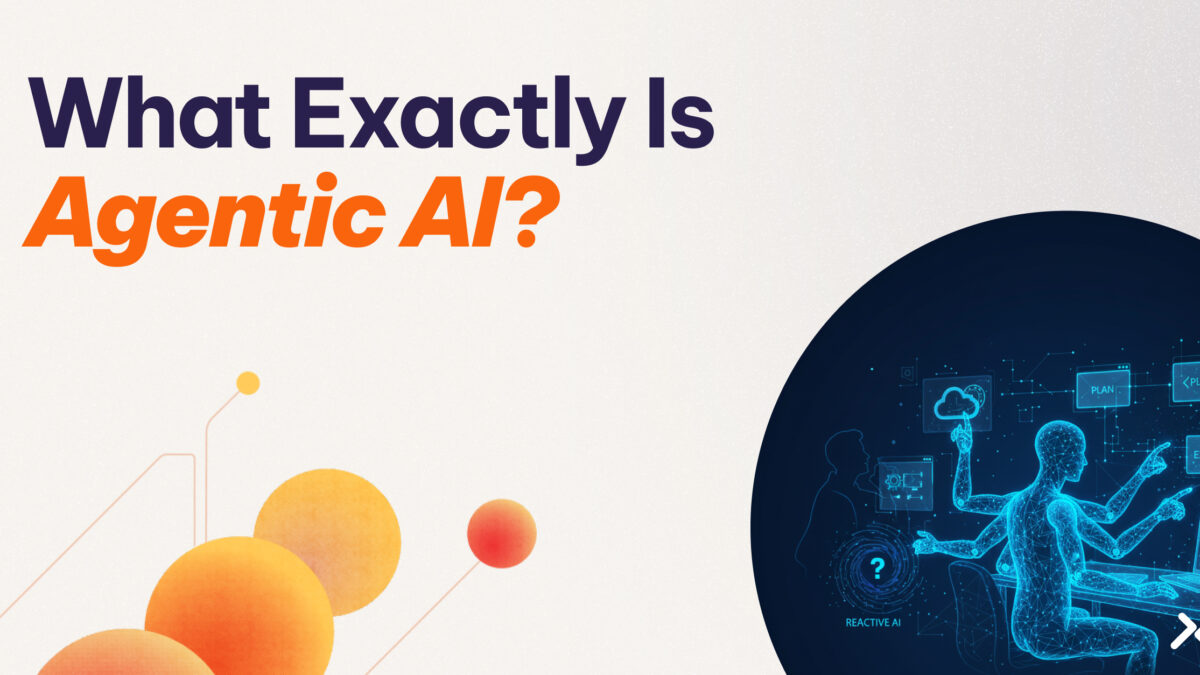
In simple terms, agentic AI refers to AI systems designed to pursue a goal by planning and carrying out multiple steps, often using tools and adapting based on the results. Instead of only responding to one prompt, an agent can potentially decide what actions are needed, execute them, check the results, and continue until it reaches an appropriate stopping point.
That difference could have a major impact on how people use computers and online services. However, agentic AI also introduces important questions around accuracy, privacy, security, cost, and human oversight.
What Is Agentic AI?
Agentic AI describes AI systems that can operate with a degree of autonomy toward a defined objective.
A traditional chatbot usually follows a straightforward pattern:
You ask a question → the AI generates a response.
An agentic system can involve a longer process:
You provide a goal → the AI plans tasks → uses available tools → evaluates results → takes additional actions → produces an outcome.
The exact level of autonomy varies considerably between systems. Some AI agents may only perform a few predefined actions, while more sophisticated systems can coordinate several tools and steps.
For example, imagine telling an AI assistant:
“Research three laptops suitable for video editing, compare their specifications, organize the information into a table, and prepare a summary.”
A basic chatbot could provide a written answer based on information available to it. An agentic system could potentially search for information, gather specifications, compare the results, organize the data, and produce the requested report.
The important point is that agentic AI focuses on completing goals and workflows rather than merely generating individual responses.
How Is Agentic AI Different From Generative AI?
The two terms are related, but they are not identical.
Generative AI refers to AI systems that can generate content such as text, images, audio, video, or code.
Agentic AI focuses more on the ability of an AI system to pursue objectives, make decisions about the next steps, interact with tools, and complete workflows.
Generative AI can therefore be one of the components inside an AI agent.
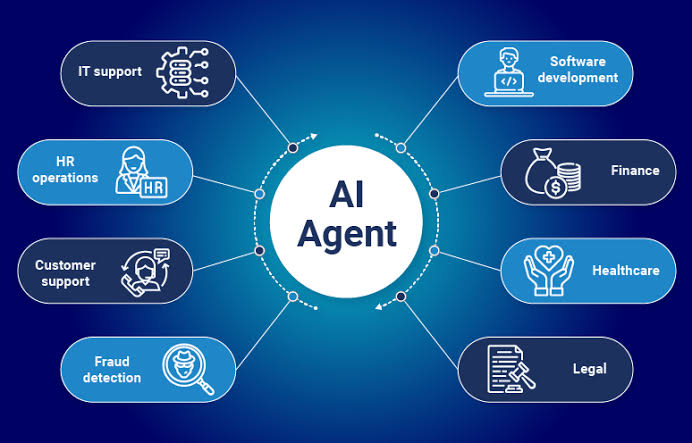
For example, an AI agent might use a language model to understand instructions, a web-search tool to gather information, a spreadsheet tool to analyze numbers, and another application to produce a report.
This means agentic AI is not necessarily a completely different type of artificial intelligence. Instead, it can be viewed as a broader system that combines AI reasoning or generation with tools, instructions, memory, planning, and actions.
How Does an AI Agent Work?
Different AI agents use different architectures, but many agentic systems contain several common components.
1. A Goal
The system needs an objective.
For example, the goal could be to summarize research, organize customer information, monitor a workflow, analyze a spreadsheet, or prepare a report.
A clearly defined goal gives the system something to work toward.
2. Planning
The AI determines which steps may be required to achieve the objective.
For a research task, those steps might include finding sources, extracting relevant information, comparing findings, and preparing a summary.
Planning does not always mean that the AI creates a perfect plan before taking action. Some systems can adjust their next step based on what happens during execution.
3. Tools
An agent becomes much more useful when it can interact with external tools.
Depending on the system, these tools could include:
- Web search.
- Databases.
- Spreadsheets.
- Calculators.
- Code execution environments.
- Business software.
- File systems.
- APIs.
- Email or communication platforms.
- Cloud services.
The AI model itself may not directly contain all the information or capabilities required to complete a task. Tools give the system ways to obtain information or perform actions.
4. Memory or Context
Some agentic systems can retain relevant information during a task or across interactions, depending on how they are designed.
Memory can help an agent understand previous steps, maintain task context, and avoid repeatedly asking for information.
However, memory also creates privacy considerations. Users and organizations should understand what information an AI system stores, where it is stored, and how it is used.
5. Evaluation
A useful agent should not simply perform an action and assume that everything worked.
It may need to inspect the result and determine whether another step is necessary.
For example, if an AI agent attempts to retrieve information from a website and the result is incomplete, it could try another method or ask the user for clarification.
6. Action
The final component is execution.
Depending on its permissions, an AI agent may be able to create documents, update records, analyze data, interact with software, or perform other digital tasks.
This is also where human oversight becomes particularly important. Giving an AI permission to perform an action is different from simply asking it to explain something.
Agentic AI vs a Normal Chatbot
| Feature | Traditional Chatbot | Agentic AI System |
|---|---|---|
| Primary purpose | Answer questions and generate responses | Pursue goals and complete workflows |
| Planning | Usually limited | Can involve multi-step planning |
| Tool use | May be limited | Can integrate multiple tools |
| Autonomy | Usually low | Can be higher depending on permissions |
| Actions | Primarily generates information | May perform actions through connected systems |
| Adaptation | Usually responds to the current prompt | Can adjust subsequent steps based on results |
This comparison is simplified because modern AI assistants can combine chatbot and agentic capabilities. The boundary between the two categories is therefore not always perfectly clear.
Real-World Examples of Agentic AI
Agentic AI becomes easier to understand when you look at practical workflows.
Research
An AI agent could potentially break a research assignment into smaller tasks, search multiple sources, collect relevant information, compare findings, and organize the results.
The human still needs to review important claims and sources because an AI system can make mistakes or misunderstand information.
Software Development
AI agents can assist developers by examining code, identifying potential problems, writing proposed changes, running tests, and revising code based on test results.
This does not mean developers become unnecessary. Instead, the developer can potentially spend more time reviewing architecture, requirements, security, and important decisions while the AI handles some repetitive development tasks.
If you are interested in learning more about development, our guide on creating a website in 2026 provides a useful introduction to building an online presence.
Customer Support
An AI agent could potentially receive a customer request, retrieve account information, check relevant documentation, determine the appropriate next step, and escalate the issue when human intervention is necessary.
Businesses still need safeguards because incorrect automated actions can create customer-service and financial problems.
Business Administration
Imagine a small business receiving dozens of routine inquiries every day. An agentic system could potentially categorize messages, retrieve information, draft responses, update records, and flag unusual cases for a human employee.
The value comes from reducing repetitive work rather than simply producing more text.
Data Analysis
An agent could receive a spreadsheet, inspect its structure, calculate statistics, identify trends, create charts, and prepare a summary.
Human review remains important when decisions depend on the results.
Our guide on learning data analysis in Nigeria explains how this broader skill can be developed.
Marketing
An AI agent could potentially help organize a marketing workflow by researching topics, preparing content drafts, analyzing campaign information, and creating reports.
That does not mean every marketing decision should be automated. Brand voice, customer relationships, compliance, and strategic decisions still benefit from human judgment.
Why Does Agentic AI Matter?
The significance of agentic AI comes from the possibility of moving from AI that answers to AI that helps execute.
That distinction can change how people interact with software.
For decades, computer users have needed to learn how different applications work. You open one program to write a document, another to manage a spreadsheet, another to search for information, and another to communicate with a team.
Agentic systems could increasingly act as an interface between the user and these tools.
Instead of manually coordinating every step, a user could describe the desired outcome and allow the system to coordinate some of the underlying work.
Agentic AI Could Change How We Work
One of the most important implications is workflow automation.
Consider a simple business reporting process. A person might currently need to:
- Download sales data.
- Open a spreadsheet.
- Clean the data.
- Calculate totals.
- Create charts.
- Write a summary.
- Send the report to a manager.
An appropriately configured AI agent could potentially coordinate several of these steps.
The human would still define the objective, establish permissions, review important results, and handle decisions that require judgment.
This distinction is important because automation does not remove responsibility. It can change where that responsibility sits in the workflow.
What Does Agentic AI Mean for Nigerians?
Agentic AI is not only relevant to large technology companies. It could affect Nigerian students, freelancers, entrepreneurs, developers, marketers, researchers, and small businesses.
For a small business owner, an AI-assisted workflow could help organize repetitive administrative tasks.
For a freelancer, AI agents could potentially assist with research, project organization, documentation, and other repetitive digital tasks.
For students, agentic systems could help organize research and learning activities. However, students should use AI as a learning aid rather than simply submitting AI-generated work as their own.
For developers, agents could help with coding, testing, documentation, and debugging.
For digital marketers, AI could assist with research, content planning, data analysis, and campaign reporting.
Our Digital Skills & Tutorials section covers several of these broader digital skills.
Agentic AI and the Future of Online Work
AI automation could change the nature of many digital jobs.
Tasks that involve repetitive information processing may become easier to automate. At the same time, people may place greater value on skills involving judgment, communication, creativity, domain knowledge, problem-solving, and the ability to supervise technology effectively.
This does not mean that every job will disappear because of AI. The actual effect will depend on the technology, the industry, the specific task, costs, regulations, and how organizations choose to deploy AI.
Workers can therefore benefit from learning how AI systems work rather than simply treating them as mysterious tools.
What Skills Are Useful in an Agentic AI World?
You do not necessarily need to become an AI engineer to benefit from agentic AI.
Several practical skills can become useful:
- Understanding how AI systems work.
- Writing clear instructions and prompts.
- Basic data analysis.
- Digital research.
- Cybersecurity awareness.
- Understanding APIs and software integrations.
- Critical thinking and fact-checking.
- Workflow automation.
- Communication and project management.
If you want to explore broader digital education, this collection of 100+ digital courses on Selar may provide different subjects to explore.
People interested in programming and websites can also look at this frontend website development mentorship.
For cybersecurity learners, this cybersecurity course collection is another option to investigate.
These are referral links, so Infolandia may earn a commission if you make a qualifying purchase. Review each course’s syllabus, instructor information, price, and learning format before purchasing.
Agentic AI Has Real Risks
The ability to take action makes agentic AI potentially more useful, but it also creates additional risks.
Incorrect Decisions
An AI agent can misunderstand instructions or make an incorrect assumption.
If it only produces a draft, the consequences may be limited. If it has permission to modify records, send messages, make purchases, or change systems, the consequences can be much more significant.
Privacy
An agent may need access to files, emails, databases, calendars, or other information to complete a task.
That makes access control extremely important.
Organizations should only give an AI system the permissions it actually needs.
Security
AI agents that interact with external websites, applications, or files can create new security considerations.
Developers and organizations need to consider what happens when an agent encounters malicious instructions, untrusted data, or an application that behaves unexpectedly.
Hallucinations
Agentic systems can still generate incorrect information.
Adding tools and planning capabilities does not automatically make an AI infallible. Important information should therefore be verified, particularly when decisions involve money, security, legal obligations, health, or other high-stakes matters.
Human Oversight Still Matters
One of the biggest misunderstandings about agentic AI is the idea that humans can simply hand over a complicated task and walk away.
In many situations, that would be inappropriate.
A safer approach is to define what the AI is allowed to do, what requires approval, what information it can access, and when a human must intervene.
For example, an AI system might be allowed to draft an email but require human approval before sending it. Similarly, an agent might analyze financial information without being allowed to make financial transactions.
The more authority an AI system receives, the more important monitoring and permission controls become.
Agentic AI Is Not Magic
The term “agentic AI” can sometimes make the technology sound more autonomous than it actually is.
Most practical AI agents operate within boundaries established by their developers or users. They depend on available models, tools, data, permissions, software integrations, and infrastructure.
When an agent fails, it may be because the underlying AI misunderstood the task, the tool returned incomplete information, the system lacked access, or the workflow itself was poorly designed.
Understanding these limitations helps people use agentic AI more realistically.
How Businesses Can Start Using Agentic AI
A business does not need to automate everything at once.
A practical starting point is to identify repetitive digital workflows.
For example:
- Collecting information from routine forms.
- Summarizing internal documents.
- Preparing recurring reports.
- Organizing customer inquiries.
- Creating first drafts of routine communications.
- Analyzing structured business data.
- Monitoring defined workflows.
Start with tasks that are repetitive and relatively easy to verify. Then measure whether the system actually saves time or improves the workflow.
That approach is generally more useful than adopting AI simply because the technology is fashionable.
How Agentic AI Could Affect Websites and Online Businesses
Websites may also become increasingly connected to AI agents.
Instead of visitors navigating dozens of pages manually, AI-powered interfaces could help users find information, compare products, complete forms, or perform other tasks.
For online businesses, this could create opportunities to improve customer support and automate repetitive operations.
It also means website owners may need to think more carefully about structured information, APIs, accessibility, security, and how their websites expose useful information to software systems.
If you are building an online presence, our complete website creation guide covers the fundamentals of building a website.
Agentic AI vs Automation
Agentic AI and traditional automation are related, but they are not exactly the same.
Traditional automation usually follows predefined rules.
For example:
If a customer submits a form, send an automatic confirmation email.
An agentic workflow can potentially handle a less rigid process:
Review the customer’s request, identify the relevant information, determine the appropriate workflow, retrieve supporting information, draft a response, and escalate unusual cases.
The second workflow involves more interpretation and decision-making. That flexibility can be useful, but it also introduces more opportunities for mistakes.
Why Agentic AI Matters Now
AI has already changed how people search for information, create content, write code, analyze data, and communicate.
Agentic AI extends that trend by focusing more strongly on action and workflow completion.
The important shift is not simply that AI can generate better text. It is that AI systems can increasingly interact with software and tools to accomplish multi-step objectives.
For individuals, that could mean having digital assistants capable of handling more complex workflows.
For businesses, it could mean automating parts of operations that previously required manual coordination.
For developers, it could mean building applications where AI is not merely a conversational feature but an active component of the software.
What Should You Learn About Agentic AI?
If you are new to the subject, start with the fundamentals instead of immediately trying to build a complicated AI agent.
Learn how large language models work at a high level. Understand prompting, APIs, data, automation, security, and basic programming concepts.
Then experiment with simple workflows where you can easily verify the results.
Our ChatGPT vs Grok comparison is also useful if you want to understand how different AI assistants can approach similar tasks.
Final Thoughts
Agentic AI represents an important development in the evolution of artificial intelligence.
Instead of limiting AI to answering individual questions, agentic systems can be designed to pursue goals, plan multiple steps, use external tools, evaluate results, and take actions within defined permissions.
That capability could influence software development, customer service, research, marketing, data analysis, online businesses, education, and many other digital workflows.
At the same time, agentic AI should not be treated as an infallible digital employee. AI systems can make mistakes, misunderstand instructions, expose sensitive information, or take an incorrect action when given inappropriate permissions.
The most useful approach is therefore to understand both sides of the technology: what AI agents can do and where humans still need to remain in control.
For Nigerians building digital skills, businesses, websites, and online careers, learning about agentic AI now can help you understand one of the major directions in which AI-powered software is developing.
For more practical AI, technology, and digital-skills guides, explore the Digital Skills & Tutorials section on Infolandia.
Affiliate disclosure: Some links in this article are affiliate or referral links. If you purchase a course through one of these links, Infolandia may earn a commission at no additional cost to you. Affiliate links are included where the resource is relevant to the subject, but you should review the course details, price, syllabus, and suitability before purchasing.