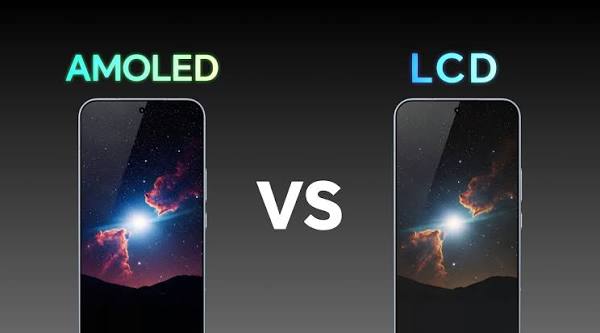
When buying a smartphone in 2026, one specification you will see repeatedly is the display type. Some phones come with AMOLED screens, while many affordable models still use LCD panels. At first glance, both types can look good, especially when you view them in a shop with the brightness turned up.
The difference becomes more noticeable when you use the phone every day. Watching videos, reading articles, browsing social media, playing games, viewing photos, and using the phone outdoors can all reveal differences between AMOLED and LCD technology.
For Nigerian smartphone buyers, the choice is also closely connected to budget. AMOLED displays are common on mid-range and premium phones, while LCD remains popular on affordable devices because it can help manufacturers keep prices lower.
So, is AMOLED actually better than LCD? In many areas, AMOLED has technical advantages. However, that does not mean every AMOLED phone is automatically a better purchase than every LCD phone. Brightness, resolution, refresh rate, colour calibration, software, battery capacity, processor, and overall phone quality still matter.
This guide explains the differences between AMOLED and LCD phones, their advantages and disadvantages, and what Nigerian buyers should consider before spending money on a new smartphone.
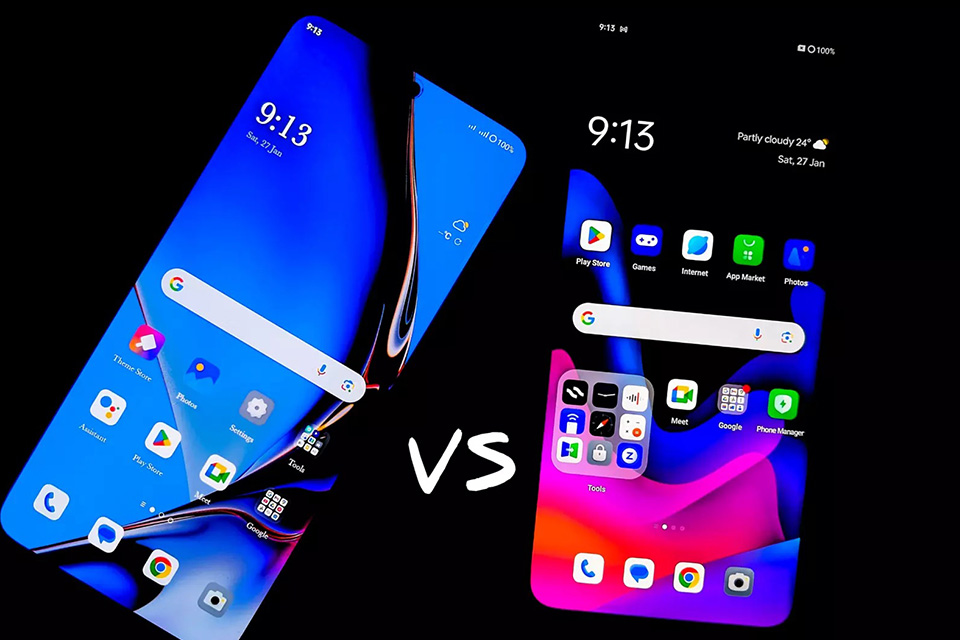
What Is an AMOLED Display?
AMOLED stands for Active Matrix Organic Light-Emitting Diode. Unlike a conventional LCD, an AMOLED display does not require a separate backlight to illuminate the entire screen.
Individual pixels can produce their own light. When a pixel needs to display black, it can essentially switch off. This is one of the main reasons AMOLED screens can produce very deep blacks and extremely high contrast.
Samsung explains that AMOLED uses individually controlled pixels, while LCD displays rely on a backlight. This difference affects contrast, power consumption, thickness, and other aspects of the viewing experience.
Xiaomi also describes AMOLED as a self-emitting display technology where individual pixels illuminate themselves rather than relying on a separate backlight.
What Is an LCD Display?
LCD means Liquid Crystal Display. LCD smartphone screens use a backlight behind the display layers to illuminate the pixels and create the image you see.
This technology has been used in phones, televisions, computer monitors, tablets, and many other electronic devices for years. It remains popular because LCD panels can offer good image quality while keeping device costs relatively low.
For example, Xiaomi identifies the Redmi 12 as an LCD phone and describes LCD as a reliable and cost-effective display technology.
That is important when comparing phones at different price points. An LCD display is not automatically a poor display. A well-tuned LCD panel can still provide good brightness, accurate colours, smooth scrolling, and a pleasant everyday experience.
AMOLED vs LCD: The Main Difference
The simplest way to understand the difference is to look at how the screen produces light.
| Feature | AMOLED | LCD |
|---|---|---|
| Backlight | Does not require a traditional backlight | Uses a backlight |
| Black levels | Very deep blacks | Black can appear more grey because of the backlight |
| Contrast | Very high contrast | Generally lower contrast |
| Power use | Can be more efficient with dark content | Backlight remains active |
| Thickness | Can enable thinner designs | Requires additional backlight layers |
| Cost | Often found on more expensive phones | Common on affordable phones |
| Always-On Display | Well suited to pixel-level lighting | Less suited to true pixel-off always-on implementations |
1. AMOLED Has Better Black Levels
One of the easiest differences to notice is black.
On an AMOLED screen, individual pixels can turn off completely when displaying black. As a result, a black area can appear genuinely black rather than dark grey.
LCD screens use a backlight, so some light can still pass through the display even when the image is supposed to be black.
This difference becomes particularly obvious when watching movies in a dark room or using a smartphone with a dark interface.
Samsung describes individually illuminated AMOLED pixels as a major reason the technology can deliver deeper blacks and stronger contrast than conventional LCD displays.
2. AMOLED Usually Offers Higher Contrast
Contrast describes the difference between the darkest and brightest parts of an image.
Because AMOLED pixels can switch off individually, AMOLED displays can achieve extremely deep blacks. That gives photographs, videos, games, and other content a more pronounced visual appearance.
LCD screens can still produce attractive images, especially when they have good calibration and resolution. However, they generally cannot match the pixel-level black control of AMOLED.
If you frequently watch movies or YouTube videos on your phone, this difference can be noticeable.
3. AMOLED Can Be More Efficient With Dark Content
AMOLED’s ability to switch individual pixels off can also provide an efficiency advantage when displaying dark or black content.
If a large part of an AMOLED screen is completely black, those pixels do not need to produce light. Xiaomi specifically notes that pixels that are not emitting light consume no power, which is also useful for features such as certain always-on display implementations.
However, do not assume that every AMOLED phone automatically has better battery life than every LCD phone.
A phone’s battery capacity, processor efficiency, display brightness, refresh rate, mobile-network usage, software optimisation, and other hardware all affect battery life.
For example, an AMOLED phone with a small battery and very high brightness can still have shorter battery life than an LCD phone with a larger battery and efficient processor.
4. LCD Can Still Be Excellent for Bright Environments
One reason LCD remains relevant is that display performance is more complicated than simply comparing panel technologies.
Peak brightness, outdoor readability, anti-reflective coatings, screen size, resolution, and calibration all affect how easy a display is to see.
Samsung’s recent display guidance notes that OLED and non-OLED technologies have different strengths and that LCD-based technologies can have advantages in peak brightness depending on the panel and application.
Therefore, if you spend a lot of time outdoors, do not buy a phone solely because it has AMOLED. Check its actual brightness and outdoor readability as well.
5. AMOLED Usually Looks More Vibrant
AMOLED phones often have strong colour contrast and vivid images. That can make photos, videos, games, wallpapers, and social-media content look particularly attractive.
Samsung describes AMOLED as offering strong colour reproduction and high contrast, while Xiaomi similarly highlights rich colours and contrast as characteristics of AMOLED displays.
Still, vibrant does not always mean more accurate.
Some displays are deliberately tuned to make colours look more saturated. If you edit photographs or video, colour accuracy may matter more than simply having the most eye-catching display.
6. LCD Is Often More Affordable
This is where LCD becomes particularly important for Nigerian buyers.
When manufacturers build a smartphone around a tight price target, an LCD panel can help them allocate more of the budget to other components such as the processor, storage, battery, camera system, or network hardware.
That means you should not automatically reject an LCD phone simply because a competing model has AMOLED.
For someone buying a phone under ₦100,000, for example, an LCD phone with a good processor, 128GB storage, a large battery, and reliable software may be more practical than an AMOLED phone with weaker hardware elsewhere.
Our guide to the best phones under ₦100,000 in Nigeria can help if you are shopping within that budget.
7. AMOLED Is Common on Premium Smartphones
AMOLED has become strongly associated with mid-range and premium smartphones.
Samsung’s Galaxy smartphones use several generations of AMOLED technology, including Dynamic AMOLED 2X on many current premium models. Samsung’s current display information shows Dynamic AMOLED 2X across several Galaxy flagship devices.
Xiaomi also uses AMOLED panels on higher-end devices. For example, the Xiaomi 15 uses a CrystalRes AMOLED display with an adaptive refresh rate that can range from 1Hz to 120Hz.
These examples show why display technology should be considered alongside the phone’s overall specification rather than in isolation.
8. AMOLED Can Make Phones Thinner
Because AMOLED panels do not need the same traditional backlight structure as LCD panels, manufacturers can design thinner display assemblies.
This can contribute to slimmer smartphone designs and gives manufacturers more flexibility when designing curved and foldable devices.
Samsung explains that AMOLED’s self-emitting design allows thinner displays and contributes to the flexibility required for certain smartphone form factors.
That does not mean every AMOLED phone is thinner than every LCD phone. Other components, especially the battery and camera system, also influence the final thickness of a smartphone.
AMOLED vs LCD for Watching Movies and YouTube
If you watch a lot of movies and YouTube videos, AMOLED can provide an impressive viewing experience.
The deep blacks and high contrast can make dark scenes look more convincing. Colours can also appear more vivid on a well-tuned AMOLED panel.
However, screen size and speaker quality also matter. A large LCD phone with good speakers can still be enjoyable for video consumption.
Do not overlook resolution either. A Full HD LCD can look sharper than a lower-resolution AMOLED display when other factors are equal.
AMOLED vs LCD for Gaming
Gaming performance depends heavily on the processor and GPU, but the display still affects the experience.
A high-refresh-rate display can make scrolling and supported game animations appear smoother. AMOLED panels can also provide fast pixel response, which helps reduce visible motion blur.
Samsung and Xiaomi both highlight fast response and smooth motion among the characteristics associated with AMOLED technology.
However, do not buy an AMOLED phone specifically for gaming without checking its processor.
A powerful AMOLED display cannot compensate for a weak chipset. If gaming is your priority, compare the processor, GPU, cooling, refresh rate, touch response, battery, and sustained performance together.
Our 2026 smartphone requirements for gaming guide covers the other specifications you should consider.
AMOLED vs LCD for Photography
If you take lots of photographs, the display can influence how you perceive the images, but it does not determine the actual camera quality.
A vivid AMOLED screen may make photos look more impressive on the phone itself. However, the quality of the camera sensor, image processing, lens, stabilisation, and software determines the photograph you capture.
Therefore, do not buy a phone with a better screen simply because you assume it has a better camera.
If photography matters to you, compare the complete camera system as well as the display.
AMOLED vs LCD for Reading
Both technologies can work well for reading.
What matters more is resolution, screen size, brightness control, text sharpness, viewing distance, and your personal comfort.
Some AMOLED phones use pulse-width modulation or other brightness-control methods at lower brightness levels. People can respond differently to display flicker, so if you are sensitive to it, check the specific phone’s display behaviour rather than assuming every AMOLED panel behaves identically.
Likewise, LCD phones vary considerably in quality. A good LCD can be comfortable for long reading sessions.
Does AMOLED Damage Your Eyes?
It is too simplistic to say that AMOLED is either “bad for your eyes” or “better for your eyes.”
Eye comfort depends on several factors, including brightness, viewing distance, ambient lighting, flicker characteristics, screen size, font size, and how long you use the device.
Some newer displays include low-blue-light or flicker-reduction features, but the implementation varies between manufacturers and models.
Samsung has also developed OLED panels with reduced blue-light emission, while some current devices offer specific eye-comfort or flicker-reduction modes.
If a particular display causes discomfort, try lowering the brightness, enabling the phone’s eye-comfort settings, increasing text size, and taking regular breaks.
What About Burn-In on AMOLED?
One consideration when buying an AMOLED phone is the possibility of image retention or burn-in after prolonged exposure to static elements.
OLED technology uses individually illuminated organic pixels. Over a long period, heavy use of static elements at high brightness can contribute to uneven pixel ageing.
Modern phones use software and hardware measures to reduce the risk, and ordinary use does not mean your AMOLED screen will automatically develop burn-in.
Still, if you keep the same static image on the screen for long periods every day, display longevity becomes a factor worth considering.
Can LCD Screens Burn In?
LCD does not have the same OLED pixel-ageing mechanism associated with AMOLED burn-in. LCD panels can experience other forms of image retention or panel degradation, but the underlying technology is different.
This is one reason some buyers who keep their phones for many years may still appreciate LCD technology.
AMOLED vs LCD for Battery Life
This comparison needs some context.
AMOLED can be more efficient when displaying black or predominantly dark content because individual pixels can turn off. However, displaying bright content can require substantial power, and overall battery life depends on the complete smartphone.
LCD uses a backlight, so it does not gain the same pixel-off advantage when displaying black content.
In real-world use, compare the phone’s battery capacity and independent battery tests rather than choosing solely based on display technology.
AMOLED vs LCD for Nigerian Smartphone Buyers
Nigerian buyers should consider the environment in which the phone will be used.
If you regularly use your phone outdoors, check its brightness and sunlight readability. If you watch a lot of videos at night, AMOLED’s contrast can be appealing. If you are working with a limited budget, an LCD phone may allow you to get better performance elsewhere.
Power consumption can also matter. If you spend much of the day on mobile data and away from a charger, look at the complete battery and efficiency package.
For more Nigerian smartphone buying advice, explore our 2026 smartphone buying guide.
Should You Buy an AMOLED Phone?
AMOLED is worth considering if you value:
- Deep blacks.
- High contrast.
- Vivid colours.
- Premium viewing quality.
- High refresh rates on compatible models.
- Thin smartphone designs.
- Always-on display functionality on supported devices.
It can be particularly attractive if you watch a lot of videos, play games, browse social media, or simply enjoy a premium-looking display.
However, make sure the rest of the phone matches your needs.
Should You Buy an LCD Phone?
LCD remains a sensible choice if you value:
- Affordable smartphone pricing.
- Good everyday image quality.
- Large screens at lower prices.
- Long-term familiarity with LCD technology.
- Better allocation of your budget toward processor or storage.
A good LCD phone can be an excellent everyday device. If you mainly use WhatsApp, browsing, banking, school applications, social media, and YouTube, you may not need AMOLED to have a good smartphone experience.
What Should You Prioritise When Buying a Phone?
Display technology is important, but it should not be the only specification you consider.
Before buying a smartphone, compare:
- Processor: Determines much of the phone’s everyday and gaming performance.
- RAM: Helps with multitasking.
- Storage: Determines how many apps, photos, videos, and files you can keep.
- Battery: Affects how long the phone can operate between charges.
- Charging: Determines how quickly you can replenish the battery.
- Camera: Important if photography and video are priorities.
- Software support: Affects security and useful lifespan.
- Display: Determines much of your visual experience.
- Build quality: Important if you want the phone to last.
Our guide to the signs that your phone needs replacement can also help if you are deciding whether to upgrade your current device.
AMOLED vs LCD: Which One Is Better for Budget Phones?
If you have a limited budget, do not sacrifice the entire phone just to get AMOLED.
For example, imagine choosing between an inexpensive AMOLED phone with limited storage and a stronger LCD phone with more storage, a better processor, and a larger battery. The LCD device could provide the more practical experience even though AMOLED is technically more advanced in several display characteristics.
That is why the right question is not simply “AMOLED or LCD?”
The better question is “Which phone gives me the features I actually need for my budget?”
Can AMOLED Replace a Good LCD?
AMOLED has several technical advantages, but LCD is not obsolete.
Both technologies continue to appear in smartphones because manufacturers design devices for different price ranges and user requirements.
A premium AMOLED smartphone can provide an impressive visual experience. At the same time, a well-designed LCD phone can deliver excellent everyday performance at a lower price.
Your decision should therefore depend on the complete device rather than the display label alone.
What About Super AMOLED, Dynamic AMOLED and Other Names?
Smartphone manufacturers use different names to describe their display implementations.
AMOLED refers to the underlying active-matrix OLED technology. Super AMOLED is a Samsung display implementation that integrates the touch sensor into the display structure. Samsung explains that Super AMOLED combines the touch-sensing layer with the actual display.
Samsung also uses names such as Dynamic AMOLED and Dynamic AMOLED 2X for newer display technologies used across its smartphones.
Therefore, do not assume that every screen labelled AMOLED has exactly the same quality. Brightness, resolution, refresh rate, colour calibration, HDR support, touch response, and panel generation can all differ.
Final Thoughts: AMOLED vs LCD Phones
AMOLED and LCD both have a place in the smartphone market.
AMOLED’s biggest strengths include deep blacks, high contrast, vibrant images, fast response characteristics, and the ability to turn individual pixels off. Those characteristics make it particularly attractive for movies, games, photographs, and premium smartphone experiences.
LCD remains valuable because it can provide good image quality at a lower device cost. That makes it particularly relevant for affordable smartphones where buyers need to balance the display against processor performance, storage, battery capacity, and other features. Xiaomi, for example, describes LCD as a reliable and cost-effective display technology.
For most buyers, the decision should come down to the complete phone. If two phones have similar processors, storage, battery, cameras, software support, and price, AMOLED can be a compelling display advantage. If choosing AMOLED means accepting significantly weaker hardware elsewhere, a good LCD phone may make more sense.
If you are comparing smartphones for different budgets, you can also explore our best smartphones to buy in Nigeria guide and our 2026 laptop buying guide if you are considering a larger device instead.
For accessories such as phone cases, chargers, screen protectors, and other smartphone equipment, you can also check Shopinverse through our referral link. Product availability and prices can change, so check the current listing before purchasing.
Affiliate disclosure: Some links in this article are referral or affiliate links. If you purchase a qualifying product through one of these links, Infolandia may receive a commission at no additional cost to you. Affiliate links are included where they are relevant to the topic, and you should always compare specifications, prices, warranty terms, and seller information before buying.