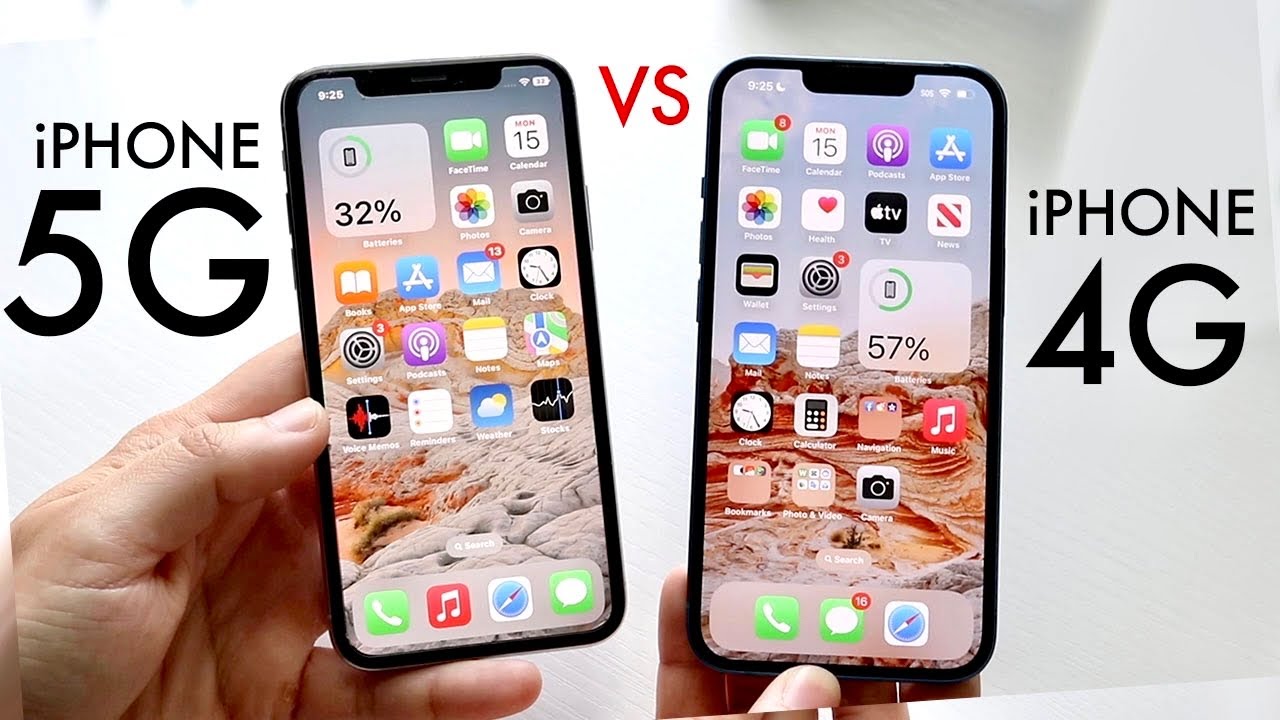
When buying a new smartphone in Nigeria, one question comes up more often than it used to: Should I buy a 4G phone or pay more for 5G?
A few years ago, 5G phones were mostly expensive flagship devices. Today, 5G has moved into more affordable smartphone categories, while 4G phones remain widely available and can still provide a good everyday internet experience.
That creates a genuine choice for Nigerian buyers. You can spend less on a capable 4G phone, or spend more on a 5G device that gives you access to newer mobile-network technology where compatible coverage is available.
The important thing is that 5G is not automatically better for every person. Your location, mobile network, data usage, phone budget, and how long you intend to keep the device all matter.
In this guide, we compare 5G vs 4G phones, explain the differences in practical terms, and look at what Nigerian smartphone buyers should consider in 2026.

5G vs 4G: What Is the Difference?
4G and 5G are different generations of mobile network technology.
4G, commonly associated with LTE, brought significantly faster mobile internet compared with older 3G networks. It made activities such as HD video streaming, video calls, mobile browsing, online gaming, and large downloads much more practical on smartphones.
5G is the newer generation. It is designed to provide higher capacity, faster speeds, lower latency, and improved performance in suitable network conditions.
The actual experience depends on more than the number displayed beside your network signal. Your operator, location, network congestion, spectrum, phone hardware, and network conditions can all affect real-world performance.
For example, the Nigerian Communications Commission’s current network-performance reporting specifically tracks differences in speed, stability, responsiveness, regional conditions, and the real-world experience of 4G and 5G users.
Is 5G Really Faster Than 4G?
In suitable conditions, yes. 5G is designed to provide considerably higher performance than 4G.
However, the phrase “5G is faster” does not mean every 5G connection will outperform every 4G connection at every moment. A strong 4G connection can sometimes provide a better experience than a weak or congested 5G connection.
There is also independent evidence that 5G can improve everyday web experiences in Nigeria. A GSMA analysis using Speedtest data from Q1 2024 found that, in Nigeria, pages loaded 24% faster on 5G than 4G for Google, 27% faster for YouTube, and 47% faster for Facebook in the data it analysed.
Those figures are useful evidence, but they should not be treated as a guarantee of the speed you will personally receive. Mobile performance changes by location, operator, device, time of day, and network conditions.
How Much 4G and 5G Are Nigerians Actually Using?
5G adoption in Nigeria has been increasing, but 4G remains much more widely used.
NCC industry statistics for July 2026 show 4G at 54.31% of mobile-generation usage, compared with 4.74% for 5G. The same data shows the share associated with 2G and 3G continuing to decline over time while 4G and 5G increase.
This is important when deciding whether you need a 5G phone. You are buying into a growing technology, but 4G is still a major part of Nigeria’s mobile ecosystem.
5G vs 4G Phone Comparison
| Feature | 4G Phone | 5G Phone |
|---|---|---|
| Network generation | Fourth generation | Fifth generation |
| Typical performance | Good for everyday mobile internet | Potentially much faster in suitable coverage |
| Latency | Higher than 5G in suitable conditions | Designed for lower latency |
| Coverage | Generally more established | Still expanding in Nigeria |
| Phone prices | Usually cheaper | Often more expensive, although affordable models exist |
| Battery considerations | Varies by device | Varies; 5G use can affect battery consumption depending on conditions |
| Long-term flexibility | Good for current everyday use | Provides access to newer network technology |
What Is a 4G Phone?
A 4G phone is a smartphone with hardware capable of connecting to fourth-generation cellular networks.
Modern 4G phones can handle most everyday activities without a problem. You can use WhatsApp, browse websites, stream videos, attend online classes, use social media, make video calls, download applications, and use mobile banking services.
For many people, these activities are more important than having the highest possible network speed.
4G can therefore remain a sensible choice if your local network provides good coverage and your smartphone budget is limited.
For example, MTN describes its 4G LTE service as providing high-speed data and also offers 4G smartphone and broadband options.
What Is a 5G Phone?
A 5G phone contains a modem and other compatible hardware that allow it to connect to supported 5G mobile networks.
A 5G phone does not mean that you will be connected to 5G everywhere. When 5G coverage is unavailable, compatible phones can generally fall back to earlier network technologies.
The NCC confirms that most 5G phones are backward compatible and can receive 4G, 3G, and 2G coverage where those networks are available.
MTN also states that its 5G phones automatically access 4G LTE and lower networks in areas where 5G is unavailable.
Does a 5G Phone Need a Special SIM?
This is one of the questions Nigerian buyers frequently ask.
The answer depends on the network operator and SIM situation, but a 5G-capable phone also needs access to a compatible network and coverage in your location.
MTN states that its 4G SIMs are compatible with its 5G network, meaning customers generally need a compatible 5G device and coverage rather than a separate 5G SIM upgrade.
Airtel similarly states that its 4G SIMs can be automatically upgraded to 5G, provided the customer has a compatible device and 5G access.
Because operator policies can change, check your network provider’s current requirements before buying a phone specifically for 5G.
5G vs 4G Speed for Everyday Tasks
The biggest difference you are likely to notice is speed when the network conditions are favourable.
Web Browsing
Both 4G and 5G can provide a good browsing experience. The difference becomes more noticeable when websites contain large images, videos, scripts, or other data-heavy content.
A faster 5G connection can reduce waiting time when loading large pages, but the quality of the website and your phone’s browser also matter.
YouTube and Video Streaming
4G is already capable of supporting video streaming. You do not need 5G simply to watch YouTube.
However, 5G can be useful when downloading large videos, streaming at higher quality, or using multiple connected services at the same time.
Downloading Large Files
This is an area where 5G can make a noticeable difference.
If you regularly download large applications, videos, documents, operating-system updates, or other files over mobile data, a fast 5G connection can reduce download times when coverage and network capacity are good.
Video Calls
Both technologies can support video calls. The more important factors are connection stability, upload performance, latency, and congestion.
A stable 4G connection can therefore be more useful than an unstable 5G connection.
5G vs 4G for Gaming
Mobile gaming is another area where people often assume 5G automatically makes everything better.
5G can provide lower latency and higher capacity under suitable conditions. That can help applications that require responsive network communication.
However, your gaming experience also depends on the phone’s processor, graphics performance, RAM, cooling system, game server, and network stability.
A powerful 4G phone can therefore provide a better gaming experience than a weak 5G phone.
If gaming is your priority, do not buy a phone based on its 5G logo alone. Compare the processor and other hardware too.
5G vs 4G for Social Media
For WhatsApp, Facebook, Instagram, TikTok, X, and similar applications, 4G is already sufficient for most users.
5G becomes more useful when you regularly upload large videos, download large files, stream high-quality content, or use your phone as a hotspot.
If your social-media usage mainly consists of messages, photographs, short videos, and ordinary browsing, a good 4G phone may provide everything you need.
Does 5G Use More Data Than 4G?
5G itself does not automatically consume more data for the same activity.
If you download the same 500MB file, the file is still approximately 500MB whether you download it through 4G or 5G.
The difference is that 5G can make data-intensive activities faster. Because content loads more quickly, you may be tempted to stream at higher quality, download more files, or use data-heavy applications more frequently.
Airtel also notes that 5G does not inherently use more data, although faster speeds can encourage users to consume more content.
Does 5G Drain Your Phone Battery Faster?
Battery consumption depends on the phone, modem, network conditions, signal strength, and how the device manages connections.
When a phone has to work harder to maintain connectivity, battery consumption can increase. Poor coverage can also affect power usage.
Modern 5G smartphones have become more efficient, so you should not automatically reject 5G because of battery concerns. Instead, look at independent battery tests for the specific phone you intend to purchase.
Battery capacity remains important too. Our guide on how to extend smartphone battery life contains additional practical tips.
5G Coverage in Nigeria: Why Location Matters
This may be the most important part of the 5G vs 4G discussion for Nigerian buyers.
Buying a 5G phone does not create 5G coverage where none exists.
You need three things to use 5G:
- A 5G-capable smartphone.
- A mobile operator with 5G service in your area.
- Actual 5G coverage where you are using the phone.
Coverage can also vary between neighbourhoods. A person may receive strong 5G service in one part of a city and fall back to 4G somewhere else.
The NCC’s current network-performance reporting highlights regional differences and the gap between 5G-capable devices and effective 5G access.
Before paying extra for a 5G phone, check your operator’s coverage information.
MTN provides a 5G coverage and device information page, while Airtel provides its own 5G coverage and support information.
5G vs 4G Phone Prices in Nigeria
Price is one of the strongest reasons people continue buying 4G phones.
4G technology has been available for longer, so manufacturers can offer inexpensive devices with 4G connectivity.
5G phones used to be concentrated in the premium market, but that has changed. More affordable 5G smartphones are now available.
Even so, you should compare the complete specification rather than simply paying extra for the 5G label.
For example, a ₦150,000 5G phone may have less RAM, storage, or camera capability than a similarly priced 4G phone. Whether that trade-off makes sense depends on how valuable 5G connectivity is to you.
Should You Buy a 4G Phone in 2026?
A 4G phone can still make sense if:
- Your area has limited 5G coverage.
- Your budget is tight.
- You mainly use WhatsApp and social media.
- You browse the web and watch videos.
- You do not regularly download very large files.
- You already have reliable 4G coverage from your network.
- You would rather spend your money on better storage, RAM, battery, or processor performance.
For example, our guide to the best phones under ₦100,000 in Nigeria is useful if your main priority is keeping your smartphone budget low.
Should You Buy a 5G Phone in 2026?
A 5G phone may make more sense if:
- 5G coverage is available where you live and work.
- You frequently use mobile data.
- You download large files.
- You stream high-quality video.
- You use your smartphone as a hotspot.
- You want access to newer network technology.
- You plan to keep the phone for several years.
A 5G phone can also be a useful choice when the price difference between a comparable 4G and 5G model is relatively small.
Just make sure the rest of the hardware is suitable for your needs.
5G Does Not Automatically Mean a Better Phone
This is worth repeating.
5G describes network connectivity, not overall smartphone quality.
A phone can have 5G and still have an entry-level processor, limited storage, average cameras, a poor display, or weak battery performance.
Meanwhile, a good 4G phone may have excellent battery life, a better display, more storage, and a stronger processor for the same money.
When comparing two phones, consider the complete package.
What Specifications Should You Check Besides 5G?
Before purchasing a smartphone, check:
- Processor: determines much of the phone’s everyday performance.
- RAM: affects multitasking.
- Storage: determines how many applications and files you can keep locally.
- Battery: affects how long the device can operate between charges.
- Display: affects reading, video, gaming, and general usability.
- Camera: matters if you frequently take photos or videos.
- Software support: affects security and long-term usability.
- Network bands: important when buying imported phones.
- Build quality: especially important if you use the phone heavily.
Our broader 2026 smartphone buying guide for Nigeria goes into more detail about the specifications to consider.
What About 5G Phones Under ₦100,000?
Budget 5G phones are becoming more common, but this is where careful comparison becomes especially important.
If you find a 5G phone near ₦100,000, do not immediately assume it is a better deal than a similarly priced 4G phone.
Check the processor, actual RAM, storage, battery, display, software version, camera quality, warranty, and network-band compatibility.
You should also confirm whether the advertised price applies to the exact RAM and storage configuration being sold.
Our Redmi vs TECNO comparison is another example of why comparing the complete specification is more useful than focusing on one feature.
Where Can You Buy a 4G or 5G Phone?
When buying a smartphone online, compare several sellers and check the final price, warranty, delivery terms, and exact model configuration.
You can also check Shopinverse through our referral link when looking for smartphones and related accessories. Availability and prices can change, so verify the current product information before purchasing.
If you are buying from a physical shop, ask the seller to show you the exact model number and storage/RAM configuration before making payment.
4G vs 5G for Nigerian Students
Students often do not need 5G unless their location already has good 5G coverage and they regularly use mobile data for demanding activities.
A good 4G phone can handle online classes, research, WhatsApp groups, video streaming, document downloads, email, and social media.
However, students who frequently download large educational files or use their phone as a hotspot may appreciate the additional speed available from 5G where coverage is strong.
If you are shopping specifically for school, see our guide to the best phones for university students in Nigeria.
4G vs 5G for Remote Work
For remote workers, the decision depends heavily on how the phone is used.
If your phone is mainly used for email, messaging, authentication, and occasional browsing, 4G may be sufficient.
If you use the phone as a hotspot for a laptop, regularly participate in video meetings, upload large files, or work from locations without fixed broadband, 5G can become more useful.
Still, network stability should come before theoretical maximum speed. A stable 4G connection is often preferable to an inconsistent 5G signal.
Our guide on using a laptop for online classes also covers the wider connectivity requirements for remote work and learning.
4G vs 5G for Content Creators
Content creators can benefit from 5G when uploading large videos, transferring files, managing cloud storage, or working from locations without fast Wi-Fi.
However, the phone’s camera, processor, storage, display, and thermal performance can matter more than network generation when you are actually editing content.
If you are looking for a phone specifically for video production, our smartphone requirements for video editing guide covers the hardware to consider.
5G vs 4G: What About Hotspot Use?
Hotspot users have a particularly good reason to consider 5G.
A phone with a strong 5G connection can potentially provide much faster internet to a laptop, tablet, or other compatible devices.
This can be useful when you work from different locations and do not have access to Wi-Fi.
However, hotspot performance depends on your operator’s network capacity and your location. A 5G icon does not guarantee a specific speed.
Can a 5G Phone Connect to 4G?
Yes. This is one of the reasons a 5G phone can provide flexibility.
When you move outside a 5G coverage area, a compatible phone can fall back to available 4G or other supported networks.
The NCC specifically notes that most 5G phones are backward compatible with 4G, 3G, and 2G networks.
That means buying a 5G phone does not make it useless in areas where 5G is unavailable.
What About Wi-Fi 5GHz?
Do not confuse 5G mobile networks with 5GHz Wi-Fi.
They are different technologies.
A router advertising a 5GHz Wi-Fi band does not mean that it is providing a 5G cellular connection. MTN also specifically distinguishes 5G mobile technology from 5GHz Wi-Fi in its support documentation.
How to Check Whether 5G Is Available in Your Area
Before buying a 5G phone, check the network you intend to use.
Start with your operator’s official coverage information. MTN provides a 5G coverage option through its 5G service page, while Airtel provides coverage information through its 5G support page.
You can also consult the Nigerian Communications Commission for regulatory and industry information.
Coverage can change as operators add sites and upgrade infrastructure, so checking current information is better than relying on an old social-media post.
Final Thoughts: 5G or 4G?
The choice between a 4G and 5G phone comes down to your actual needs.
4G remains a practical option for Nigerian users who want an affordable smartphone for everyday browsing, social media, streaming, communication, online learning, and mobile banking. Nigeria’s current mobile-generation data shows that 4G remains much more widely used than 5G.
5G makes more sense when you have reliable 5G coverage, use a lot of mobile data, need faster downloads and uploads, use your phone as a hotspot, or want a device with newer network capabilities for the years ahead.
The important thing is not to buy a phone simply because the box says “5G.” Look at the entire device.
Check the processor, RAM, storage, battery, display, camera, software support, network compatibility, warranty, and current price. Then consider whether the 5G capability will actually benefit your daily routine.
For many Nigerian buyers, a strong 4G phone can still provide excellent value. For others, paying more for a capable 5G device can make sense because it provides access to faster networks where those networks are available.
Technology will continue moving toward newer mobile-network standards, but your best purchase is the phone that matches your location, budget, network, and actual usage.
For more Nigerian smartphone buying guides, comparisons, and technology advice, explore the App & Product Reviews section on Infolandia.
Affiliate disclosure: Some links in this article are referral or affiliate links. If you purchase through a qualifying link, Infolandia may receive a commission at no additional cost to you. Affiliate links are included where they are relevant to the topic. Always check the current price, specifications, availability, warranty, and seller information before purchasing.