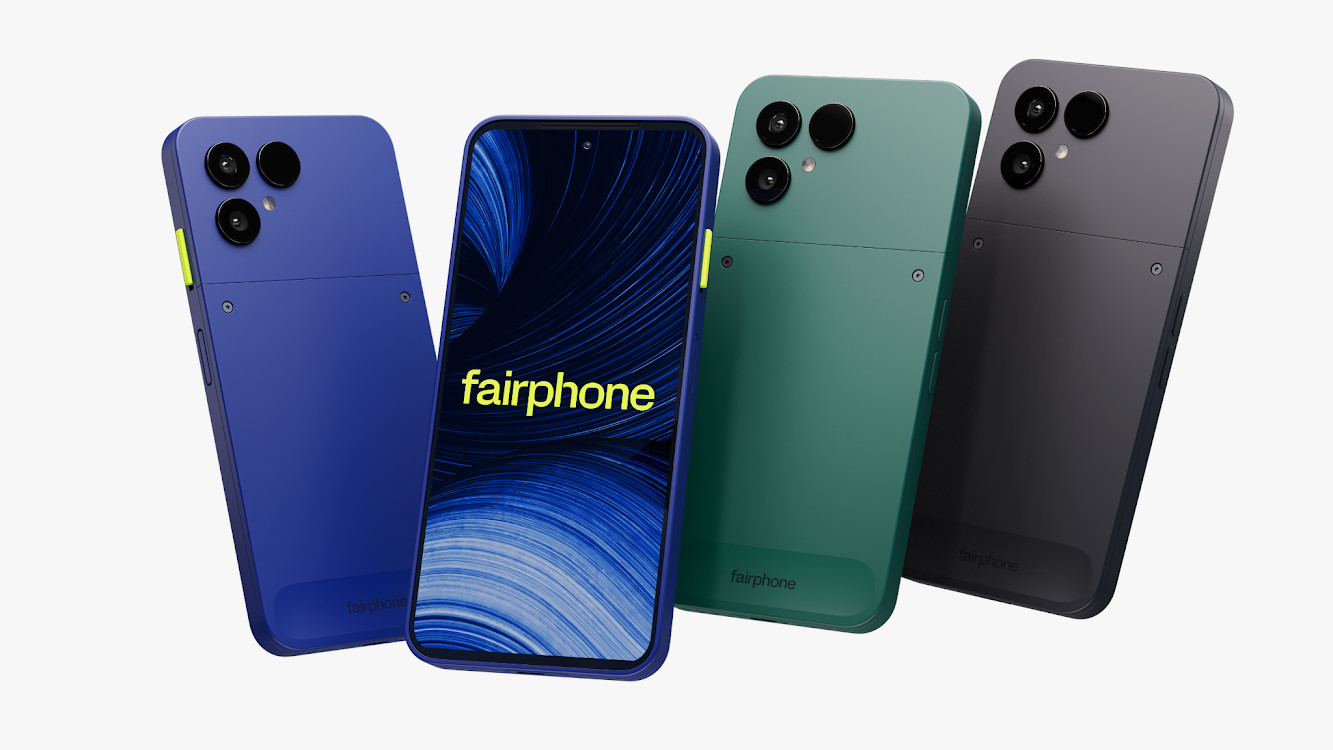
The Fairphone 6, officially marketed as the Fairphone (Gen. 6), represents this philosophy. It combines a modern Android experience with a modular design, replaceable components, expandable storage and a long software-support commitment. Its most interesting feature is not necessarily its processor or camera. It is the fact that users can replace important parts, including the battery and screen, without treating the entire phone as disposable.
But does this approach make the Fairphone 6 a good smartphone to buy? Can its Snapdragon processor handle demanding applications? Is the camera competitive with Samsung, Google and Apple? How practical is its removable battery? And should Nigerian smartphone buyers consider importing one?
In this detailed Fairphone 6 review, we examine its specifications, design, performance, display, cameras, battery, repairability, software support, strengths, weaknesses and purchasing considerations. We also explain the difference between the original Fairphone 6 and the newer Fairphone 6+ so that you can make an informed buying decision.
Fairphone 6 at a Glance
The Fairphone 6 is a mid-range Android smartphone designed around longevity, repairability and more responsible manufacturing. It does not attempt to compete directly with premium flagship devices in every performance category. Instead, it focuses on delivering a practical smartphone that users can maintain for years.
| Specification | Fairphone 6 |
|---|---|
| Official name | Fairphone (Gen. 6) |
| Launch | June 2025 |
| Operating system at launch | Android 15 |
| Processor | Qualcomm Snapdragon 7s Gen 3 |
| RAM | 8GB |
| Internal storage | 256GB |
| Expandable storage | microSD, up to 2TB |
| Display | 6.31-inch LTPO P-OLED |
| Resolution | 1116 × 2484 pixels |
| Refresh rate | 10–120Hz adaptive |
| Main camera | 50MP with OIS |
| Ultra-wide camera | 13MP |
| Front camera | 32MP |
| Battery | 4,415mAh removable |
| Charging | Up to 30W |
| Connectivity | 5G, Wi-Fi 6E, Bluetooth 5.4, NFC |
| SIM | Nano-SIM and eSIM |
| Water resistance | IP55 |
| Repairability | 12 user-replaceable modules |
| Software support | Through June 2033 |
| Warranty | Up to five years under Fairphone’s terms |
Specifications are based on Fairphone’s published information. Regional configurations, software versions and warranty conditions should be checked before purchasing. You can view the official Fairphone 6 specifications for the manufacturer’s latest details.
Fairphone 6 Design: A Smartphone You Can Actually Repair
One of the biggest reasons to consider the Fairphone 6 is its design philosophy. Most modern smartphones use tightly integrated construction, adhesives and components that can make repairs difficult or expensive. Replacing a damaged display or worn-out battery can sometimes require professional servicing, specialised equipment or an expensive repair process.
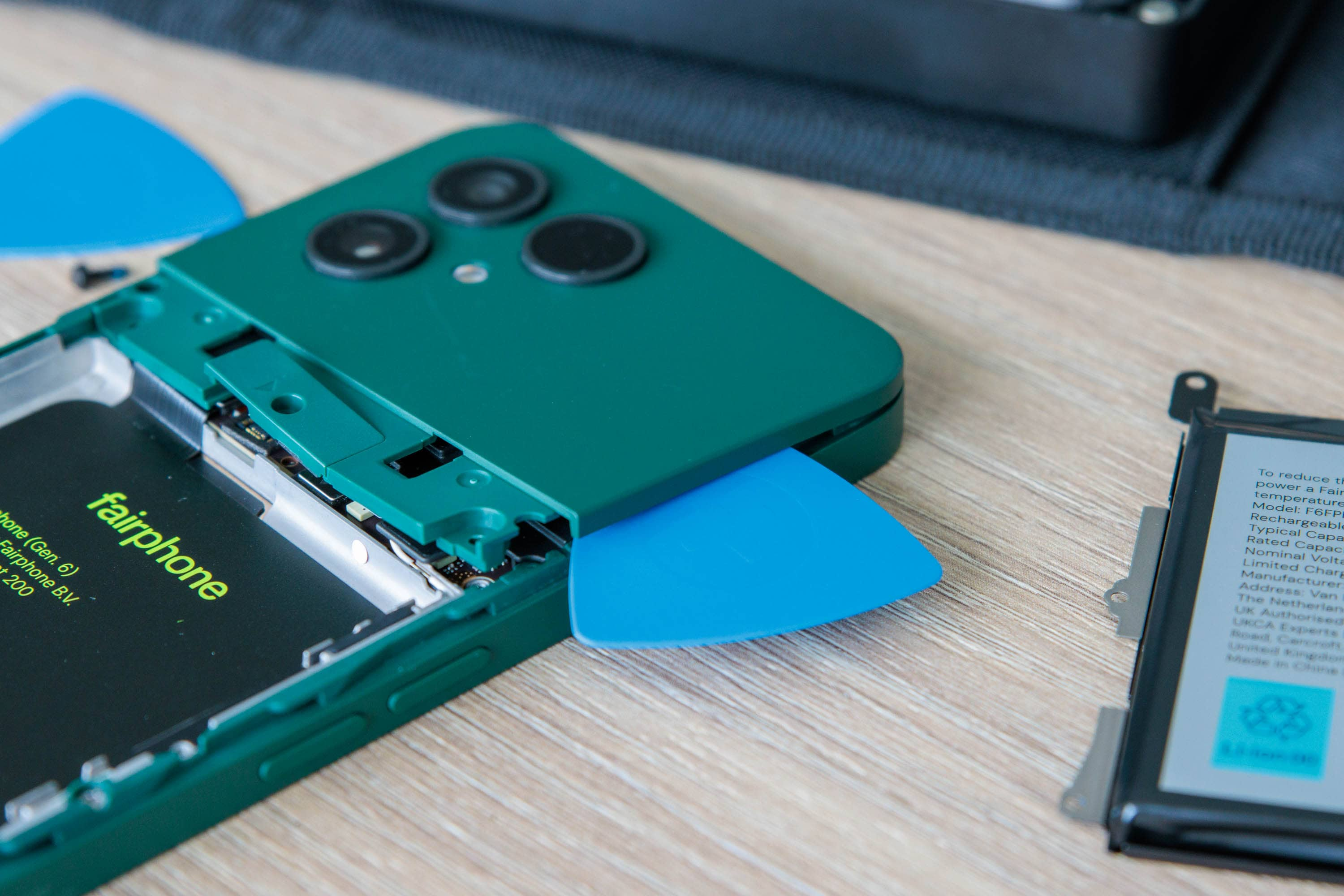
Fairphone takes a different route. The Fairphone 6 uses a modular construction that allows owners to replace selected components. Its back cover can be removed, and the device uses accessible screws to make repairs more straightforward.
The company identifies 12 user-replaceable parts. These include important components such as the battery, display, cameras and USB-C port. This design gives users more control over maintenance and reduces the likelihood that a relatively inexpensive component failure will force them to replace the entire phone.
For someone who intends to keep a smartphone for several years, this is a meaningful advantage. A worn-out battery is not necessarily the end of the device. A damaged charging port or screen can also be addressed by replacing the relevant component, subject to spare-part availability and the appropriate repair procedure.
The Fairphone 6 measures approximately 156.5 × 73.3 × 9.6mm and weighs around 191–193g, depending on the specification source. It is relatively compact compared with many large-screen Android smartphones.
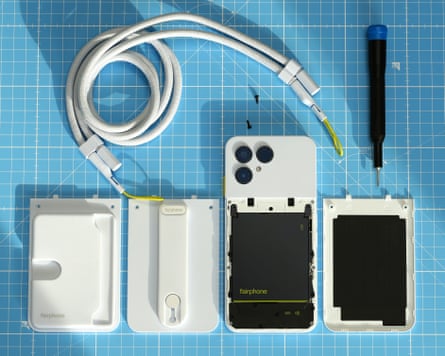
Available colours include Cloud White, Forest Green and Horizon Black for the original model. Fairphone also offers modular accessories, including a card holder, finger loop and lanyard.
However, there is a trade-off. The Fairphone 6 is not as thin or visually seamless as some premium smartphones. Its removable construction is more functional than luxurious, and users who prefer a completely glass-and-metal flagship design may not find it particularly exciting.
For buyers who value long-term ownership, however, this is one of the phone’s strongest selling points. It also makes the Fairphone 6 interesting when compared with conventional Android phones discussed in our best smartphones to buy in Nigeria guide.
Fairphone 6 Display: 6.31-Inch LTPO OLED Experience
The Fairphone 6 features a 6.31-inch LTPO P-OLED display with a resolution of 1116 × 2484 pixels. It has a pixel density of approximately 431 pixels per inch and supports an adaptive refresh rate of 10Hz to 120Hz.
OLED technology provides deep blacks, strong contrast and vibrant colours. This makes the display suitable for watching videos, reading articles, browsing social media and using everyday applications.
The adaptive refresh rate is another useful feature. A higher refresh rate can make scrolling and supported animations feel smoother, while the display can reduce its refresh rate when the content does not require it. This helps balance visual smoothness and power consumption.
Fairphone lists brightness of up to approximately 1,400 nits under specified conditions. It also uses Corning Gorilla Glass 7i for screen protection.
For everyday users, the display should be more than adequate. However, it is worth remembering that a high refresh rate does not automatically make a phone a gaming flagship. Gaming performance depends heavily on the processor, graphics hardware, cooling and software optimisation.
Users who spend significant time watching movies, streaming content or reading on their smartphones may appreciate the OLED panel. If you regularly use your phone for work, you can also explore our guides on phone requirements for video editing and smartphone requirements for graphic design.

Fairphone 6 Performance: Can Snapdragon 7s Gen 3 Handle Everyday Tasks?
The Fairphone 6 is powered by Qualcomm’s Snapdragon 7s Gen 3 processor, paired with 8GB of RAM. This is a mid-range chipset rather than a premium flagship processor.
For normal smartphone activities, the hardware is designed to provide a practical experience. These activities include:
- Browsing websites and reading online articles.
- Using WhatsApp, Telegram and other messaging applications.
- Watching YouTube videos and streaming content.
- Managing email and documents.
- Using social media platforms.
- Taking photographs and recording everyday videos.
- Running common productivity and business applications.
Its 8GB RAM configuration should also support ordinary multitasking. However, users who regularly run demanding applications, edit large video files or play graphics-intensive games should have realistic expectations.
The Snapdragon 7s Gen 3 is not in the same performance category as processors found in premium devices such as the Samsung Galaxy S26 Ultra or the latest high-end iPhones. If raw processing power is your main priority, compare it with our Samsung Galaxy S26 Ultra review and iPhone 18 Pro and Pro Max guide.
One important point is that Fairphone’s long software-support commitment does not automatically mean that the processor will remain competitive with flagship chipsets for the same period. Apps and games can become more demanding over time. Buyers should distinguish between a phone receiving security updates and a phone maintaining the performance required for every future application.
For developers, designers and other professionals, the Fairphone 6 can be a useful everyday device, but demanding workloads may justify a more powerful alternative. You can read our guides to phones for web developers and phones for university students in Nigeria before making a decision.
Fairphone 6 Camera Review: 50MP Main Camera and 13MP Ultra-Wide
The Fairphone 6 comes with a dual rear camera system consisting of a 50MP Sony LYT-700C main sensor and a 13MP ultra-wide camera. The main camera includes optical image stabilisation, while the ultra-wide camera supports autofocus and macro photography.
At the front, the phone has a 32MP selfie camera.
50MP main camera
The 50MP main camera is the primary camera for everyday photography. Its optical image stabilisation is useful because it helps reduce the effect of small movements while taking photographs or recording video.
It can be used for portraits, outdoor photography, product images, family pictures and everyday social media content. The camera also supports autofocus and digital zoom.
However, buyers should not judge camera quality by megapixel count alone. Sensor size, lens quality, image processing, exposure control and low-light performance all affect the final result.
Independent reviews have generally found the Fairphone 6’s camera system capable for ordinary photography, but not consistently competitive with similarly priced camera-focused phones. The Notebookcheck Fairphone 6 review discusses its camera performance alongside the phone’s wider strengths and limitations.
13MP ultra-wide camera
The ultra-wide camera is useful when you want to capture more of a scene without physically moving backwards. It can help with landscape photographs, group pictures and architectural scenes.
It also supports macro photography, allowing users to take close-up pictures of suitable subjects. This gives the camera system some flexibility beyond standard wide-angle photographs.
32MP selfie camera
The front camera is suitable for video calls, selfies, online meetings and social media content. It offers enough resolution for everyday use, although the final results will depend on lighting and image processing.
Video recording
The Fairphone 6 supports 4K video recording at up to 30 frames per second on the main camera, with Full HD recording available at higher frame rates. This is sufficient for many everyday recording situations.
However, content creators who require advanced video recording features, higher frame rates at 4K resolution or extensive professional camera controls may prefer a dedicated camera-focused smartphone.
For more options, explore Infolandia’s guide to the best camera phones in 2026. You can also read our discussion of zoom versus AI photography in Android flagship cameras.
Camera verdict: The Fairphone 6 offers a practical camera setup for ordinary users. However, photography enthusiasts should compare its image quality with dedicated camera-focused alternatives before purchasing.
Fairphone 6 Battery: The Removable Battery Is a Major Advantage
Battery replacement is one of the most interesting aspects of the Fairphone 6. It comes with a removable 4,415mAh battery, allowing users to replace the battery without having to discard the entire device.
This is important because smartphone batteries naturally lose capacity as they age. A phone that once lasted a full day may eventually require more frequent charging. With many conventional devices, replacing the battery can involve specialist servicing or a more complicated repair procedure.
The Fairphone 6 makes battery replacement a more accessible part of ownership.
Fairphone also advertises charging support of up to 30W. Its documentation indicates that a compatible charger can recharge the device relatively quickly for a battery of this capacity. Actual charging speed depends on the charger, cable, temperature and charging conditions.
For Nigerian users, battery capacity is particularly relevant if the phone is used for work, navigation, communication, mobile banking and entertainment throughout the day. However, real-world battery life will depend on network coverage, screen brightness, gaming, background applications and usage habits.
If you are experiencing poor battery performance on your current device, see our practical guides on extending smartphone battery life and habits that can cause your phone battery to drain quickly.
The ability to replace the battery is a significant advantage, but it does not mean the phone has unlimited battery life. Replacement parts must still be available, and users need to follow the manufacturer’s instructions.
Repairability: What Makes the Fairphone 6 Different?
Repairability is the feature that gives the Fairphone 6 its strongest identity. Fairphone designed the device so that selected components can be replaced rather than requiring users to purchase a completely new phone whenever a part fails.
The manufacturer identifies 12 user-replaceable modules. These include:
- Battery.
- Display.
- Main camera.
- Ultra-wide camera.
- Front camera.
- USB-C port.
- Loudspeaker.
- Earpiece.
- Top unit.
- Back covers and other modular components.
One of the most useful aspects is that certain repairs can be performed with a screwdriver rather than requiring specialised workshop equipment. Fairphone provides instructions and sells replacement components through its parts ecosystem, subject to availability in the buyer’s region.
You can explore the iFixit Fairphone 6 repair resources for device information and repair guidance. Fairphone also provides its own official repair instructions.
The repairability advantage is especially relevant when comparing long-term ownership costs. A damaged screen or degraded battery does not necessarily mean replacing the whole device. Instead, you may be able to purchase the affected component and extend the phone’s useful life.
For people who prefer to repair electronics rather than dispose of them, this is a meaningful difference. It also connects to the broader issue of electronic waste and responsible technology consumption.
However, buyers in Nigeria should check whether replacement parts can be shipped to their location and whether local repair support is available. A repairable phone is most useful when the necessary parts and repair knowledge are accessible.
Fairphone 6 Software: Android 15 and Long-Term Support
The original Fairphone 6 launched with Android 15. Fairphone’s software-support roadmap promises at least seven Android version upgrades and security updates through June 2033.
This is one of the phone’s strongest long-term features. Many buyers keep their smartphones for several years, and security updates are important for protecting personal information, online accounts and applications.
Fairphone also includes a feature called Fairphone Moments. This is designed to help users switch between a full smartphone experience and a more limited, distraction-reduced environment.
The idea is simple: users can access their normal Android applications when needed, then switch to a more focused experience that limits distractions. It may appeal to people who want to reduce unnecessary screen time while keeping one device for everyday communication.
Fairphone also offers a version of the device with privacy-focused /e/OS in selected markets. This alternative operating system is designed to reduce reliance on Google services and provide additional privacy controls.
Before purchasing an alternative operating-system version, check application compatibility, banking-app support, warranty conditions and the availability of updates. Fairphone notes that warranty support may require returning to its stock Android software in certain circumstances.
For additional information, visit Fairphone’s official software release notes and its Fairphone 6 /e/OS information page.
Users who are concerned about privacy should also consider reading our guide to protecting digital identity against AI voice and video deepfakes. A secure phone is only one part of protecting your personal information.
Fairphone 6 Connectivity: 5G, Wi-Fi 6E and Expandable Storage
The Fairphone 6 supports modern connectivity features, including 5G, Wi-Fi 6E, Bluetooth 5.4 and NFC. It supports a physical nano-SIM and an eSIM, subject to network and regional compatibility.
One particularly useful feature is expandable storage. The device includes 256GB of internal storage and supports microSD expansion of up to 2TB according to Fairphone’s published specifications.
This is useful for people who store photographs, videos, documents, music and offline files on their smartphones. It can also reduce the pressure to delete content whenever internal storage becomes full.
However, memory-card performance depends on the card’s specifications. A high-capacity card is not automatically as fast as internal UFS storage.
Before buying an imported Fairphone 6 for use in Nigeria, check the exact model’s supported network bands. The official documentation lists several LTE and 5G bands, but compatibility should be confirmed against your mobile network and the specific device configuration.
You can also read Infolandia’s guide on why phone storage keeps filling up and how to manage it.
Fairphone 6 Durability and Water Resistance
The Fairphone 6 has an IP55 rating. This means it offers a degree of protection against dust and water jets under specified laboratory conditions, but it should not be treated as a fully waterproof smartphone.
This is an important distinction. Some premium smartphones have higher IP ratings, which provide stronger protection under defined testing conditions. The Fairphone 6’s modular construction and repairability are its main priorities, rather than maximum water resistance.
The phone also has drop-resistance testing credentials published by Fairphone. Nevertheless, no smartphone is completely immune to damage. A protective case and careful handling remain sensible precautions.
If you regularly use your phone outdoors, around water or in demanding working environments, consider whether IP55 protection meets your needs. You can compare the Fairphone with other devices in our 2026 smartphone buying guide.
Fairphone 6 Sustainability: More Than Just a Marketing Message?
Fairphone’s central selling point is that smartphones should be designed with their entire lifecycle in mind. This includes the materials used to manufacture them, the conditions in which they are produced, how long they remain useful and what happens when they are eventually replaced.
The Fairphone 6 uses fair or recycled materials across its construction. The company reports that more than half of the device by weight comes from fair or recycled materials, alongside efforts to improve manufacturing conditions and reduce electronic waste.
Fairphone also operates an electronic-waste programme and publishes information about its environmental and social impact.
These claims should be understood as part of the manufacturer’s sustainability programme, not as proof that the device has zero environmental impact. Manufacturing, shipping, electricity use and component sourcing still have environmental consequences.
However, making a smartphone easier to repair and keeping it in use for longer can reduce the need for frequent replacement. That is a practical benefit of the Fairphone approach.
For further reading, explore Fairphone’s official impact information, its mission and sustainability approach, and the iFixit repairability resources.
Fairphone 6 Price: How Much Does It Cost?
The original Fairphone 6 launched in Europe with a recommended retail price of approximately €599 for the 8GB RAM and 256GB storage configuration. Actual prices may vary by country, retailer, promotion and availability.
It is important to distinguish the European retail price from the amount a Nigerian buyer may eventually pay. Import duties, shipping, exchange rates, retailer margins and warranty arrangements can all affect the final cost.
There is no single verified Nigerian retail price that should be assumed for every seller. Before paying, request a final naira quotation and confirm whether the device is new, used, refurbished or imported.
Also confirm whether the seller provides a return policy, proof of purchase, original accessories and a workable warranty arrangement. If the phone needs a replacement battery or screen later, check whether the relevant part can be obtained and shipped to Nigeria.
For a wider comparison of smartphone prices, explore Infolandia’s list of phones and their prices in Nigeria and our guide to the best smartphones to buy in Nigeria.
Important: Fairphone 6 vs Fairphone 6+
There is an important development buyers should understand before purchasing. In October 2026, Fairphone introduced the upgraded Fairphone (Gen. 6+). This is not simply another name for the original Fairphone 6.
The two versions share much of the same design philosophy and repairable construction, but their internal hardware differs.
| Feature | Fairphone 6 | Fairphone 6+ |
|---|---|---|
| Processor | Snapdragon 7s Gen 3 | Snapdragon 7s Gen 4 |
| RAM | 8GB | 12GB |
| Display | 6.31-inch LTPO AMOLED | 6.31-inch LTPO AMOLED |
| Battery | 4,415mAh | 4,415mAh |
| Repairability | 12 replaceable parts | 12 replaceable parts |
| Software support | Through 2033 | Through 2033 |
| Official European launch price | €599 | €649 |
The Gen. 6+ offers a newer processor and more RAM, which should make it more attractive to buyers who want additional performance headroom. The original Gen. 6 may still be worth considering if its price is significantly lower and its performance meets your requirements.
Always check the exact model name, RAM configuration and processor on the seller’s listing. Do not assume that a listing simply described as “Fairphone 6” is the newer 6+ version.
Read Fairphone’s official Gen. 6 and Gen. 6+ comparison and its Gen. 6+ announcement before making a purchase.
Fairphone 6: Advantages and Disadvantages
Advantages
- Repairable design: Important components can be replaced rather than requiring the entire phone to be discarded.
- Removable battery: Battery replacement is more accessible than on many conventional smartphones.
- Long software support: Fairphone promises support through June 2033 for the original model.
- Expandable storage: microSD support provides additional storage flexibility.
- Good everyday display: The 120Hz OLED screen provides a modern viewing experience.
- Modern connectivity: It supports 5G, Wi-Fi 6E, NFC and eSIM.
- Responsible manufacturing efforts: Fairphone places emphasis on fair materials, working conditions and reducing electronic waste.
- Modular accessories: The back-cover system supports accessories such as a finger loop, card holder and lanyard.
Disadvantages
- Not a flagship processor: Demanding gamers and heavy users may prefer a more powerful chipset.
- Average camera competitiveness: The camera system is not designed to outperform the best camera phones in its price category.
- Limited water resistance: IP55 is not equivalent to the higher water-resistance ratings found on some competing devices.
- Availability concerns: Buyers outside Fairphone’s core markets may find it difficult to purchase or service the device.
- Import and repair costs: Shipping and replacement-part availability can make ownership more complicated in Nigeria.
- Premium pricing for mid-range hardware: Some buyers may prefer a faster phone with stronger cameras for similar money.
- USB data limitations: The original model’s USB data-transfer specification is a consideration for users who frequently move large files through a cable.
Fairphone 6 vs Samsung, Google Pixel and Other Android Phones
The Fairphone 6 is not the obvious choice for every smartphone buyer. Its value depends on what you consider important.
If you prioritise camera quality, performance and a polished flagship experience, mainstream premium smartphones may offer better specifications. If you value repairability, replaceable parts and long-term ownership, Fairphone has a more distinctive proposition.
For comparison, read our coverage of the Samsung Galaxy S26 Ultra, Google Pixel 11 Pro and iPhone 18 Pro series.
These devices represent different buying priorities. A camera-focused phone may be better for professional photography, while a gaming-focused model may offer stronger graphics performance. Fairphone’s advantage is its repairable hardware and long-term maintenance approach.
For buyers who want to compare more devices before spending money, our articles on camera phones and phones for university students offer additional perspectives.
Is the Fairphone 6 Good for Nigerian Users?
The Fairphone 6 could appeal to Nigerian buyers who value repairability, expandable storage and long software support. However, buying one in Nigeria requires more research than purchasing a smartphone with a large local retail and service network.
There are several important considerations.
1. Network compatibility
Check the supported 4G and 5G bands against your network provider and the exact device variant. Do not rely solely on the statement that a phone supports 5G. Network-band compatibility is what determines whether it can connect properly to a particular network.
2. Replacement parts
The phone’s modular design is valuable only if replacement parts can be obtained. Check whether Fairphone ships spare parts to your location or whether a reliable seller can supply genuine components.
3. Warranty and servicing
Do not assume that an overseas manufacturer’s warranty will automatically be honoured by a local Nigerian retailer. Ask who handles warranty claims, where repairs take place and who pays shipping costs.
4. Final purchase price
Calculate the complete cost, including shipping, customs charges where applicable and any seller fees. Compare that amount with locally available alternatives.
5. Accessories and charger
Confirm what is included in the box. Fairphone’s documentation indicates that some accessories, including a charging adapter and cable, may be sold separately. Check the supported charging specification and use a suitable compatible charger.
Before purchasing any imported smartphone, read our guides on things to check before buying a phone in Nigeria and common smartphone-buying mistakes.
It is also worth considering the long-term cost of a device rather than focusing only on the initial price. Our article on the hidden cost of cheap phones in Nigeria explains why the purchase price is not always the full cost of ownership.
Who Should Buy the Fairphone 6?
The Fairphone 6 is best suited to people who value long-term ownership and the ability to repair their devices.
Buy the Fairphone 6 if:
- You want a smartphone that can be repaired more easily.
- You prefer replacing a battery instead of replacing the entire phone.
- You value long-term Android and security updates.
- You want expandable storage.
- You are interested in more responsible electronics manufacturing.
- You use ordinary productivity, communication and entertainment applications.
- You are comfortable checking import, warranty and spare-part arrangements.
Consider another phone if:
- You want the best possible camera performance for your budget.
- You play demanding mobile games regularly.
- You need flagship-level processing power.
- You want stronger water resistance.
- You need reliable local after-sales support.
- You want the lowest possible purchase price.
For readers who are not convinced that the Fairphone is the right choice, our guide to signs that your phone needs replacement can help you decide whether upgrading is necessary in the first place.
Where Can You Buy the Fairphone 6?
The safest starting point is the manufacturer’s official website. Fairphone provides product information, regional availability, spare parts and accessories through its online store.
Visit the official Fairphone website to check current product availability and purchasing options. You can also review the Fairphone Gen. 6 product page before deciding between the original model and Gen. 6+.
If you are purchasing from a third-party retailer, verify the following before paying:
- Whether the device is original and unused.
- Whether it is the original Gen. 6 or the newer Gen. 6+.
- The RAM and storage configuration.
- The exact model number and supported network bands.
- Whether the phone is locked to a particular network.
- The warranty provider and return conditions.
- Whether replacement components can be obtained.
- What accessories are included.
Do not pay a seller based solely on attractive product pictures or an unusually low price. Ask for verifiable product information and a clear return policy.
Fairphone 6 Frequently Asked Questions
Is the Fairphone 6 worth buying?
Yes, if repairability, long software support, replaceable parts and more responsible manufacturing are important to you. However, buyers who prioritise flagship performance or camera quality may find better alternatives.
Is Fairphone 6 available in Nigeria?
Availability can vary by retailer and import channel. Check Fairphone’s official regional store and verify any Nigerian seller’s stock, warranty and shipping arrangements before purchasing.
What processor does the Fairphone 6 use?
The original Fairphone 6 uses the Qualcomm Snapdragon 7s Gen 3 processor, paired with 8GB of RAM.
Does the Fairphone 6 have a removable battery?
Yes. It has a removable 4,415mAh battery, which is one of the phone’s most distinctive features.
Can the Fairphone 6 battery be replaced?
Yes. Fairphone designed the device to allow users to replace the battery. Genuine replacement-part availability should be checked for your region.
Does the Fairphone 6 support 5G?
Yes. The device supports 5G, but buyers should confirm that its exact network bands are compatible with their mobile provider.
Is the Fairphone 6 waterproof?
No smartphone should be described as completely waterproof. The Fairphone 6 has an IP55 rating, which provides limited dust and water-jet protection under specified test conditions.
How many years of updates does the Fairphone 6 receive?
Fairphone promises at least seven Android version upgrades and security support through June 2033 for the original Gen. 6 model.
Does the Fairphone 6 support microSD cards?
Yes. It supports expandable storage through a microSD card, with Fairphone listing support for cards up to 2TB.
What is the difference between Fairphone 6 and Fairphone 6+?
The original model uses the Snapdragon 7s Gen 3 processor and 8GB RAM. The newer Gen. 6+ upgrades to the Snapdragon 7s Gen 4 and 12GB RAM while retaining the same general modular design approach.
Is Fairphone 6 good for gaming?
It can handle ordinary mobile games, but it is not designed as a premium gaming smartphone. Users who play demanding games should compare its processor and graphics performance with dedicated gaming alternatives.
Final Verdict: Should You Buy the Fairphone 6?
The Fairphone 6 is an interesting alternative in a smartphone market where manufacturers often compete by adding more cameras, faster processors and increasingly complicated hardware. Its biggest achievement is making repairability a central part of the smartphone experience.
Its 6.31-inch OLED display, Snapdragon 7s Gen 3 processor, 50MP main camera, 4,415mAh removable battery, expandable storage and long software-support commitment make it a practical everyday Android device. However, its performance and camera system are not intended to compete with the most powerful flagship smartphones.
For Nigerian buyers, the biggest challenge may be availability, replacement-part access, warranty support and the final import price. These factors should be considered carefully before purchasing.
Overall, the Fairphone 6 is worth considering if you want a smartphone designed to last longer and be easier to repair. If your priority is gaming, advanced photography or maximum performance for your money, a mainstream alternative may be a better purchase.
Our recommendation: Choose the original Fairphone 6 if you find it at a worthwhile discount and its specifications meet your needs. If the newer Fairphone 6+ is available at a reasonable price difference, compare its upgraded processor and 12GB RAM before deciding.
Before making your final purchase, compare other devices using Infolandia’s 2026 smartphone buying guide, check our Nigerian phone price guide and review the official Fairphone specifications.